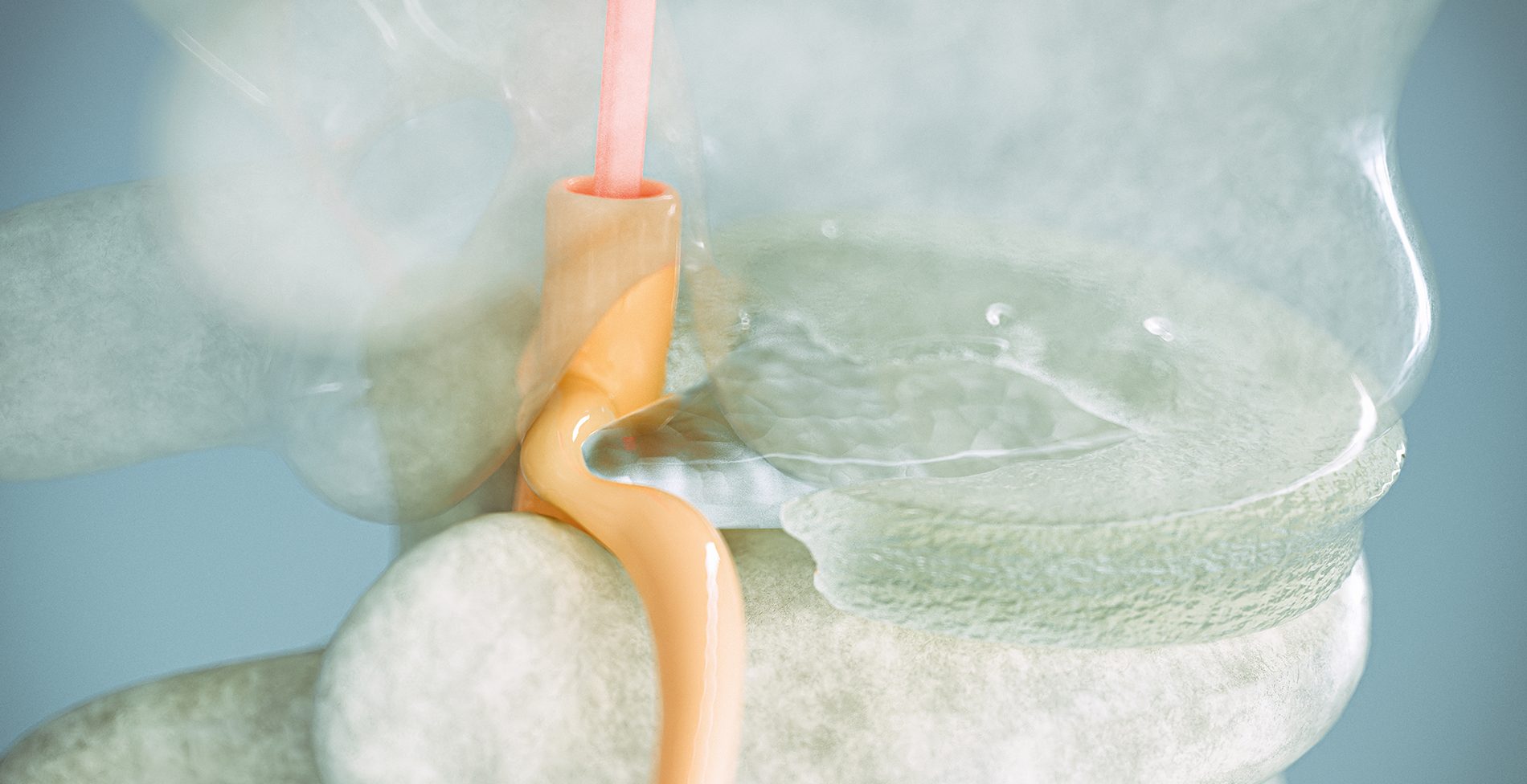
Treating Spinal Stenosis (Claudicatio Spinalis) in Düsseldorf
Back pain can make life considerably more difficult, since it affects almost every movement and markedly restricts quality of life. One of the most common causes of chronic back pain is what is known as spinal stenosis, also called spinal canal narrowing. Here the spinal canal narrows, so that nerve structures, in particular the spinal cord and the nerve roots, come under pressure. Alongside back pain, typical symptoms of spinal stenosis are radiating leg pain, numbness, tingling, muscle weakness and a reduced walking distance (claudicatio spinalis). The causes are usually age-related changes such as a herniated disc, disc wear, osteoarthritis of the facet joints or thickening of ligaments (ligamentum flavum). Lumbar spinal stenosis in the area of the lumbar spine occurs particularly frequently, cervical spinal stenosis in the cervical spine more rarely. From about the age of 50, around 40 per cent of the population is affected.
Diagnosis is made through clinical examination and imaging procedures such as MRI or CT. Depending on severity, treatment options range from conservative therapy such as physiotherapy, pain management and targeted exercises through to surgical procedures to decompress the spinal canal. Early treatment can help relieve the complaints and lastingly improve mobility and quality of life.
Answers solely from the contents of this website. Anonymous, no diagnosis.
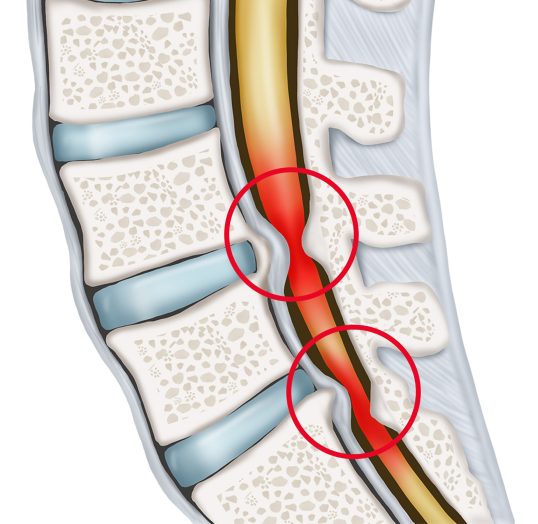
Symptome einer Spinalkanalstenose
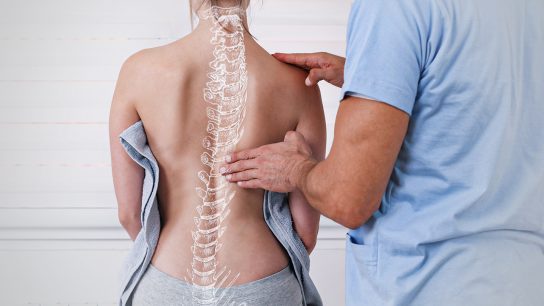
The spinal canal runs from the cervical vertebrae across the thoracic and lumbar vertebrae to the sacrum and thus reaches the entire area of the back. If spinal stenosis in Düsseldorf is already at an advanced stage, the pain extends into the whole leg as well as the arms. Weakness in the legs, tingling and numbness are then felt. Even incontinence and impaired sexual function can be a consequence of this condition.
In most cases the complaints radiate on one side only and become more tolerable in a bent posture, which in turn of course leads to a complete misalignment of the skeleton.
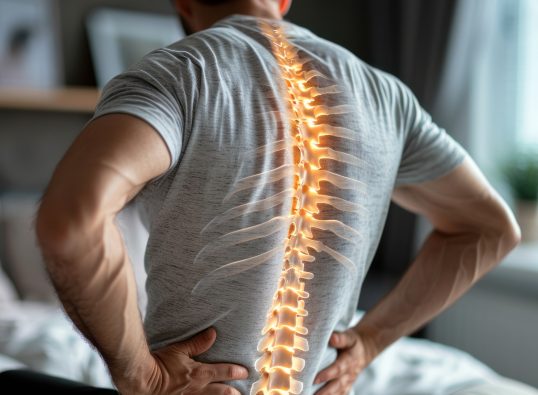
The cause of spinal stenosis
Spinal stenosis is rarely congenital. It is rather a sign of wear of the discs acquired through years of load, and therefore generally affects older patients. Because the discs lose height through loss of fluid, greater load is placed on the vertebral bodies. The ligaments along the spine become less taut and lose their elasticity. The body reacts to this with bone remodelling, in which bone spurs develop that press into the spinal canal. The area of the cervical and lumbar vertebrae is most frequently affected.
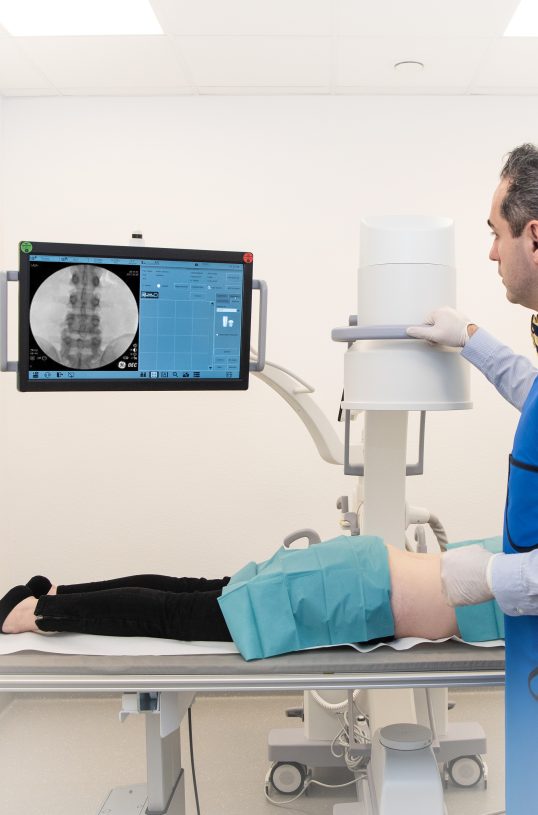
Treatment of spinal stenosis
Today there are good, promising methods for treating spinal stenosis in Düsseldorf. In 80 per cent of cases this is even done conservatively. Alongside the administration of pain-relieving medication, heat therapy and physiotherapy are carried out in order to strengthen the back muscles.
A further treatment method is the injection of depot painkillers at the exit of the nerve root in the area of the spinal canal. This is minimally invasive and leads to good treatment results.
If conservative treatment does not deliver the desired result, however, or if the severity of the stenosis is too great, a surgical procedure may become necessary. There are three different types of operation:
- Pressure relief by removing parts of the vertebral arch and the spinous process
- Connecting the spinous processes with implants so that forward and backward tilting is prevented
- Fusion of the vertebrae with screws or the patient's own bone material, for example from the iliac crest, in order to prevent the vertebrae from slipping
At our practice we specialise in treating spinal stenosis and in tailoring the right course of treatment individually. Your orthopaedic specialist in Düsseldorf will be glad to advise you which measures are suitable for you in order to achieve an optimal treatment result.
Efficient and modern treatment methods for calcific shoulder tendinitis
Competent orthopaedic specialists in Düsseldorf – several practices and a high success rate
Frequently Asked Questions: Spinal Stenosis
Which symptoms occur with spinal stenosis?
Spinal stenosis causes various symptoms, which often depend on the severity of the narrowing. Common symptoms are pain in the lower back that can radiate into the legs, numbness or tingling in the limbs, weakness in the legs and difficulty walking or standing for longer periods. In severe cases problems with bladder or bowel control can also occur.
What can be done about spinal stenosis?
Treatment of spinal stenosis varies according to severity and the individual needs of the patient. Conservative treatment methods include physiotherapy, pain medication, anti-inflammatory drugs and injections for pain relief. In severe cases where conservative methods are not sufficient, surgery can be considered in order to reduce the pressure on the nerves and improve mobility.
Is spinal stenosis curable?
Spinal stenosis is generally not curable, since it is frequently caused by degenerative changes of the spine that progress over time. The symptoms can be managed effectively, however, through suitable treatment and lifestyle changes. The goal of treatment is to relieve pain, improve mobility and increase quality of life.
What should you avoid with spinal stenosis?
With spinal stenosis certain activities should be avoided that place additional strain on the spine or could worsen the symptoms. These include heavy lifting, sitting or standing for long periods, strenuous physical activity and movements that lead to strong bending or twisting of the spine. It is important to listen to your own body and to avoid activities that trigger pain.
What is the best medicine for spinal stenosis?
There is no single best medicine for spinal stenosis, since treatment has to be adapted individually. Frequently used medicines are painkillers such as paracetamol or non-steroidal anti-inflammatory drugs (NSAIDs) such as ibuprofen. In some cases stronger painkillers or corticosteroid injections may also be necessary. The choice of medicine should be made in consultation with a doctor.
Is exercise good with spinal stenosis?
Yes, exercise can be very beneficial with spinal stenosis as long as it is gentle and controlled. Regular, light physical activity such as walking, swimming or specific exercises to strengthen the back muscles can help improve mobility and reduce pain. It is advisable to work with a physiotherapist in order to develop a suitable training programme.
Is heat good with spinal stenosis?
Heat can be helpful with spinal stenosis in releasing muscle tension and relieving pain. Heat applications such as warm baths, heat pads or warm compresses can promote circulation and improve general wellbeing. Heat should not be applied with acute inflammation, however, as this could worsen the symptoms.
Where do the legs hurt with spinal stenosis?
With spinal stenosis the pain in the legs can vary depending on which nerves are affected. The pain frequently occurs in the thighs, calves or feet and can range from a dull ache to a sharp, stabbing sensation. The pain can also be accompanied by numbness or tingling.
Is lying down good with spinal stenosis?
Lying down can have both advantages and disadvantages with spinal stenosis. While lying in a comfortable position can offer short-term relief and pain reduction, lying for long periods without movement can lead to stiffness and a worsening of the symptoms. It is important to change position regularly and to carry out light stretching exercises in order to maintain flexibility.
Does health insurance cover treatment for spinal stenosis?
Diagnostics, physiotherapy, pain management, injections with a clear indication and any necessary surgical widening of the spinal canal are covered by statutory health insurance. Some supplementary procedures may be billed privately. We inform you in Düsseldorf in advance.
How long does recovery take after surgery for spinal stenosis?
After microsurgical decompression, walking distance often improves within the first few weeks. Everyday load-bearing is usually reached after four to six weeks and full recovery after about three months. The course depends on the degree of narrowing and on your age.
Which exercises help with spinal stenosis?
Exercises in slight flexion widen the spinal canal and relieve claudicatio spinalis, for example cycling, seated flexion exercises and abdominal training. A strong hollow back and prolonged standing increase the symptoms. A physiotherapist adapts the programme to you.
More treatments for Spine Surgery
Complaints rarely come alone. We also offer these treatments from the same area in Düsseldorf.