Calcific Shoulder Tendinitis (Tendinosis Calcarea) in Düsseldorf: causes, symptoms, treatment
Calcific shoulder tendinitis, also called tendinosis calcarea, is a painful condition caused by calcium deposits at the tendon attachments of the rotator cuff. The rotator cuff is a group of four muscles and tendons in the shoulder area responsible for the stability and mobility of the shoulder joint. Calcific shoulder tendinitis can lead to restricted mobility and severe pain during certain arm movements.
Causes of calcific shoulder tendinitis
The precise causes of the development of calcific shoulder tendinitis have not yet been fully clarified. It is assumed, however, that circulatory problems and inflammation at the tendon attachments of the rotator cuff lead to increased calcium deposits. Certain risk factors such as excess weight, diabetes, thyroid conditions and genetic predisposition can also play a role.
Answers solely from the contents of this website. Anonymous, no diagnosis.

Symptome einer Kalkschulter
The symptoms of calcific shoulder tendinitis can be more or less pronounced from patient to patient. Typical signs, however, are:
- Pain during certain arm movements, particularly when raising the arm
- Restricted mobility of the arm and the shoulder
- Pain at rest, especially at night
In some cases calcific shoulder tendinitis can also be asymptomatic, that is without noticeable pain or restriction of movement.
Treatment options for calcific shoulder tendinitis at our orthopaedic practices in Düsseldorf
As a rule calcific shoulder tendinitis can be treated without surgical procedures. The following treatment options can come into consideration:
- Physiotherapy: through targeted exercises the mobility and strength of the shoulder and arm muscles can be improved.
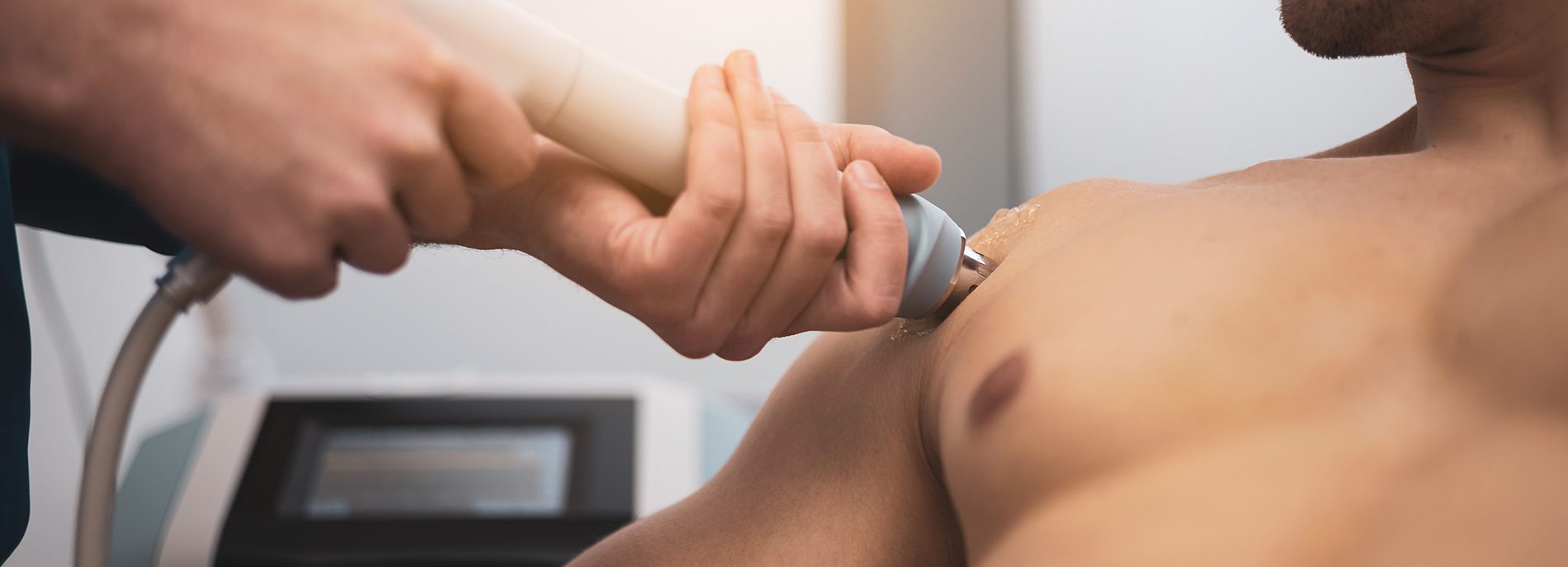
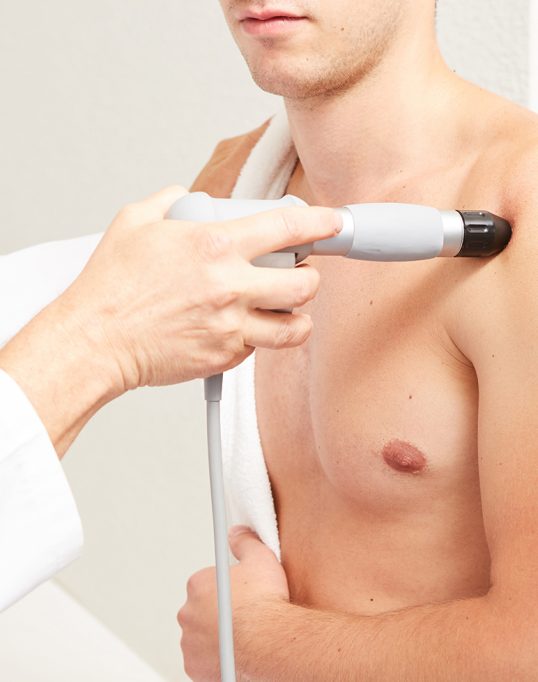
- Focused shockwave therapy: here high-energy sound waves are directed at the calcium deposits in order to dissolve them and encourage their removal by the body.
- Anti-inflammatory medication: this can relieve pain and reduce inflammation at the tendon attachments.
- Cortisone injections: a local injection of cortisone can likewise inhibit inflammation and relieve pain.
- Arthroscopic treatment: if the calcium deposits are too large or other treatment options do not work, a joint endoscopy can be carried out in which the calcium deposits are removed.
As experienced orthopaedic specialists we recommend early diagnosis and treatment of calcific shoulder tendinitis in order to avoid long-term damage. If you have questions about treatment or would like to arrange an appointment, we are glad to be available.

Efficient and modern treatment of calcific shoulder tendinitis for the targeted treatment of this condition, including shockwave therapy.
Pronounced calcium deposits can lead to severe restriction of movement and pain. Gentle applications such as physiotherapy and ointments are then no longer sufficient to restore full mobility. With focused shockwave therapy the calcium deposits can be dissolved specifically, so that the body can absorb and carry away the deposited calcium again.
As a rule five short treatment appointments are sufficient for shockwave therapy in Düsseldorf in order to remove the calcium deposits from the tendon attachments of the rotator cuff. Under certain circumstances anti-inflammatory medication should be taken in addition. If the calcium deposits are already too extensive, only an arthroscopic joint endoscopy will help. This surgical procedure can be carried out as day surgery and involves only minor strain for the patient.

Efficient and modern treatment methods for calcific shoulder tendinitis

Competent orthopaedic specialists in Düsseldorf – several practices and a high success rate
Frequently Asked Questions: Calcific Shoulder Tendinitis
Is exercise good with calcific shoulder tendinitis?
Yes, with calcific shoulder tendinitis exercise is generally recommended. Targeted movement exercises can improve circulation in the affected area and thereby encourage the dissolution of the calcium deposit. Exercise can also help maintain or restore the mobility of the shoulder. The movement should be adapted and carried out without pain, however, in order to avoid further irritation. It can be helpful to seek advice from a doctor or physiotherapist in order to learn suitable exercises and movement patterns.
What should you avoid with calcific shoulder tendinitis?
With calcific shoulder tendinitis it is important to avoid certain activities and movements so as not to worsen the symptoms. This includes avoiding overhead movements in which the arms are raised above shoulder height. Such movements can lead to pain and irritation. Heavy loads and lifting weights should also be avoided, as this places additional strain on the shoulder. Repeated movements, such as repeatedly throwing a ball or swinging a tennis racket, should be reduced, as they can intensify the pain. Abrupt, jerky movements should also be avoided in order to prevent sudden pain and injury. It is advisable to seek medical advice and, where appropriate, to learn physiotherapy exercises in order to move and rehabilitate the shoulder gently.
How long does it take for calcific shoulder tendinitis to heal?
The healing time of calcific shoulder tendinitis can vary from person to person and depends on various factors. As a rule, healing can take several months up to a year or longer. It is important to note that calcific shoulder tendinitis is a slow healing process and patience is required. The dissolution of the calcium deposit in the shoulder tissue can take place gradually, and the symptoms can improve over time. Healing can be supported by suitable treatment measures such as physiotherapy exercises, anti-inflammatory medication, injections or, in some cases, surgical removal of the calcium deposit. It is important to check progress regularly with a doctor or physiotherapist and to follow their instructions in order to promote the healing process.
What does the physiotherapist do with calcific shoulder tendinitis?
A physiotherapist plays an important role in the treatment of calcific shoulder tendinitis. They carry out a comprehensive assessment of the shoulder and develop an individual treatment plan. This can include techniques such as mobilisation, stretching, strengthening exercises and shoulder movement exercises. They can also help with posture training and ergonomic adjustments. The physiotherapist supports the healing process, relieves pain and improves the mobility of the shoulder. Regular visits and carrying out the recommended exercises are important for optimal results.
Can calcific shoulder tendinitis heal on its own?
Calcific shoulder tendinitis can heal on its own in some cases, but this is not always so. The healing process of calcific shoulder tendinitis can be lengthy and take months up to a year or longer. In some people the calcium deposit in the shoulder tissue can dissolve gradually and the symptoms can improve over time. It is important to note, however, that not all calcific shoulders heal completely without treatment. Targeted treatment carried out by a doctor or physiotherapist can support the healing process, relieve pain and improve the mobility of the shoulder. It is advisable to seek medical advice with persistent complaints in order to determine the best approach for the individual situation.
Why do people get calcific shoulder tendinitis?
The precise cause of the development of calcific shoulder tendinitis has not yet been fully clarified. It is assumed that various factors can contribute to its development. One common theory is that micro-injuries or inflammation occur in the area of the tendons of the shoulder, which trigger a reaction in the body. As a result, calcium deposits can form in the affected tendons. It is assumed that a combination of genetic predisposition, age-related changes, repeated overloading of the shoulder or trauma can play a role. Metabolic disorders or circulatory problems can also play a role. It is important to note that not everyone with these risk factors will necessarily develop calcific shoulder tendinitis. The exact mechanisms and triggers are complex and require further research.
Should calcific shoulder tendinitis be operated on?
The aim is to relieve pain and improve the mobility of the shoulder. With persistent severe pain or complications such as tendon ruptures, however, surgery can be considered. The decision to operate should be taken individually in consultation with a doctor, after careful consideration of the symptoms, the severity of the condition and the general state of health of the patient.
Is swimming good with calcific shoulder tendinitis?
Swimming can be a good form of exercise with calcific shoulder tendinitis, as it is a joint-friendly activity. The buoyancy of the water reduces the load on the shoulder and allows gentle movement without strong impact or pressure. This can improve the mobility of the shoulder and promote circulation, which can contribute to the dissolution of the calcium deposit. It is important, however, to listen to your own body and to adapt the intensity and type of swimming strokes in order to avoid pain. It can be advisable to consult a doctor or physiotherapist before starting swimming training in order to take individual recommendations and possible limitations into account.
How long does it take for inflammation in the shoulder to go away?
How long it takes for inflammation in the shoulder to subside can depend on various factors, including the cause of the inflammation, the severity of the inflammation and individual factors of the patient. In some cases mild inflammation can subside within a few days or weeks with rest, anti-inflammatory medication and physiotherapy. With chronic or more severe inflammation, however, the healing process can take considerably longer, sometimes several weeks or months. It is important to carry out the recommended treatment measures consistently and to monitor progress regularly with a doctor or specialist. Every case is individual, so it is important to be patient and to support the healing process appropriately.
Does health insurance cover treatment for calcific shoulder tendinitis?
Statutory health insurance covers diagnosis, physiotherapy, anti-inflammatory medication and any necessary arthroscopic removal of the calcium deposits. Focused shockwave therapy for calcific shoulder tendinitis is a private service in most cases. We tell you the cost in Düsseldorf in advance.
Which exercises help with calcific shoulder tendinitis?
Pain-free pendulum exercises, gentle stretching of the posterior shoulder capsule and, later, targeted strengthening of the rotator cuff are useful. Movement promotes circulation and supports the breakdown of the calcium. Carry out the exercises only within a pain-free range and have a physiotherapist guide you.
More treatments for Shoulder | Arm | Hand
Complaints rarely come alone. We also offer these treatments from the same area in Düsseldorf.