
Treatment of hip osteoarthritis (coxarthrosis) at the orthopaedic practices in Düsseldorf
After the knee, the hip joint is the most frequently affected by wear. Conditions caused by wear are called osteoarthritis, and in the case of hip osteoarthritis we also speak of coxarthrosis. The hip is a central part of the musculoskeletal system and decisive for stability and mobility. If hip osteoarthritis develops there through wear of the cartilage that protects the joint bones from abrasion, very severe pain can arise and mobility is markedly reduced. This reduces the range of action in everyday life and lastingly impairs quality of life.
Hip osteoarthritis often develops gradually over many years. Alongside the natural ageing process, typical risk factors include misalignment, excess weight, earlier injuries and a genetic predisposition. The first signs are often load-dependent pain in the groin or buttock area as well as increasing restriction of movement, for example when putting on shoes or climbing stairs. Early diagnosis and targeted treatment are decisive in slowing the progression of the condition. Many orthopaedic practices in Düsseldorf offer modern diagnostic procedures and individually tailored treatment concepts for this, ranging from conservative measures such as physiotherapy and pain therapy through to surgical procedures.
Answers solely from the contents of this website. Anonymous, no diagnosis.
The symptoms of hip osteoarthritis
In the early stage of hip osteoarthritis those affected feel nothing at first, although the process of wear has already begun. Gradually, pain appears under load. Walking and climbing stairs become increasingly difficult. Because of the disturbed tissue inside the joint, inflammation and swelling develop. It is also possible that grinding noises can be heard during movement.
The further the condition has progressed, the stronger the pain becomes and the more mobility decreases. It is also typical for the pain to occur in waves and to alternate with pain-free phases. Over time the pain then increases in frequency and intensity. It can even be that the patient eventually feels pain at rest.
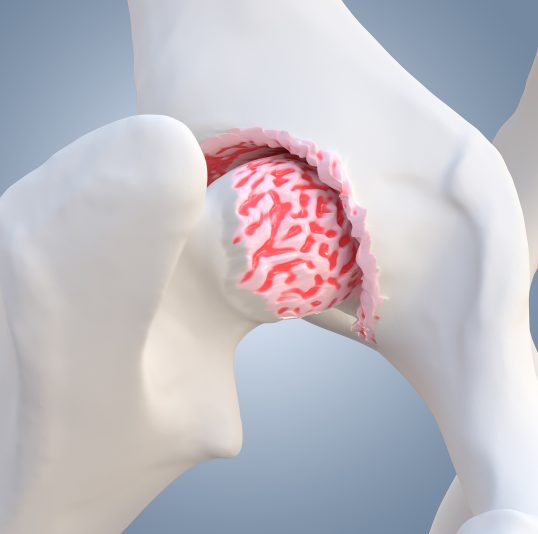
The causes of coxarthrosis
Hip osteoarthritis in Düsseldorf is in the vast majority of cases an acquired condition. This means that it arises over the course of life through load or poor posture. Predisposition, in the sense of a tendency towards wear-related conditions, is of great significance here. Injuries, falls and years of excess weight are equally a trigger for coxarthrosis. Age and sex also play a substantial role. Women are affected by hip osteoarthritis more often than men.
Osteoarthritis cannot be cured completely, but the restrictions of movement can be relieved and the course of the condition delayed. Coxarthrosis should therefore definitely be treated, and as early as possible.
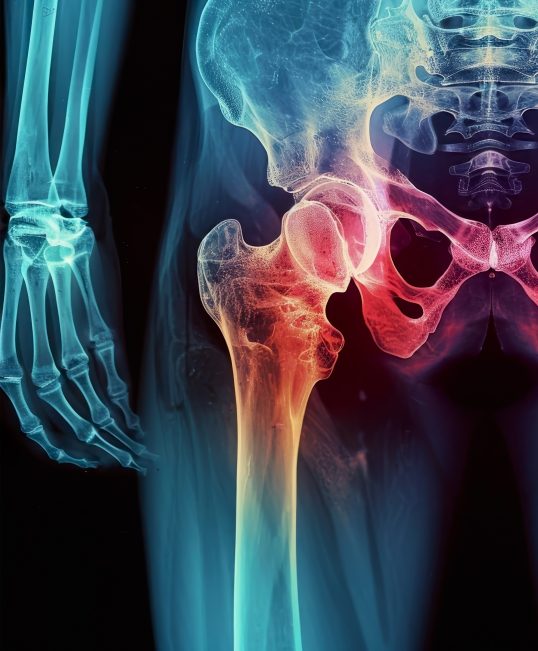
Hip osteoarthritis – the treatment
Fortunately, modern medicine today offers a whole range of treatment methods to relieve and delay hip osteoarthritis. Your orthopaedic specialist in Düsseldorf sees conservative treatment as the first choice, which delivers remarkably good results in the early stage. Alongside the administration of pain-relieving and anti-inflammatory medication, physiotherapy and custom-made orthopaedic aids can bring a high degree of relief. For patients who are overweight, eating habits must of course also be changed in order to achieve weight loss.
If the desired treatment result nevertheless fails to materialise, or if the coxarthrosis is already at a severe stage, surgery is necessary.
If the joint damage has already progressed severely, the final treatment method is a hip replacement. This operation promises very reliable results and allows most patients to return to their work and their sport actively. Because it is a fairly extensive operation, it is important to place yourself only in the hands of an experienced specialist. He or she will make the correct diagnosis beforehand and discuss every step of the procedure with the patient.
At our practice we specialise in the treatment of hip complaints and coxarthrosis in Düsseldorf and offer the full spectrum of treatment options. We will be glad to advise you if you suffer from hip osteoarthritis or have complaints of the kind described. We take our time and help you regain your accustomed ease in everyday life.
Efficient and modern treatment methods for calcific shoulder tendinitis

Competent orthopaedic specialists in Düsseldorf – several practices and a high success rate
Frequently Asked Questions: Hip Osteoarthritis (Coxarthrosis)
What can be done about hip osteoarthritis?
Non-surgical treatments such as physiotherapy, weight management and anti-inflammatory medication can be used. Aids such as walking sticks can also be helpful.
Where does it hurt with hip osteoarthritis?
The pain of hip osteoarthritis is typically located in the hip area, but it can also radiate into the knee or the groin.
What should you avoid with hip osteoarthritis?
You should avoid activities that place high loads on the hip joint, such as jumping or lifting heavy loads.
Can hip osteoarthritis be cured without surgery?
A cure is not possible without surgery, but the symptoms can often be controlled well through conservative treatment methods.
What is the best remedy for hip osteoarthritis?
The best remedy depends on the individual situation, but physiotherapy, pain management and adapted movement exercises are frequently recommended.
What does the orthopaedic specialist do for hip pain?
The orthopaedic specialist will carry out a thorough examination in order to diagnose the cause of the pain, and can then recommend suitable treatment, including medication, physiotherapy or surgery.
Is hip osteoarthritis curable?
Hip osteoarthritis is a chronic condition and cannot currently be cured, but its progression can be slowed and the symptoms can be relieved.
Is cycling good for the cervical spine?
Yes, cycling can be good for the cervical spine as long as you maintain correct posture. It strengthens the back muscles and improves general endurance and flexibility.
Is walking good with hip osteoarthritis?
Yes, regular walking is recommended, as it promotes mobility and strengthens the muscles without overloading the joint.
Does health insurance cover treatment for hip osteoarthritis?
Examination, X-ray, physiotherapy, pain medication and the fitting of a hip prosthesis are covered by statutory health insurance. Additional procedures such as hyaluronic acid injections for coxarthrosis are private services. We tell you the cost in Düsseldorf in advance.
How long does recovery take after a hip replacement?
Standing up and walking with support are usually possible on the day of the operation or the day after. After about six weeks everyday life is largely free of symptoms, and full load-bearing capacity is reached after three to six months. Follow-up rehabilitation speeds up the course.
Which exercises help with hip osteoarthritis?
Cycling, swimming, aqua aerobics and targeted strengthening of the gluteal and thigh muscles maintain mobility and stability. Avoid impact loads such as jogging on hard ground and deep squats. Regularity matters more than intensity.
More treatments for Knee | Hip
Complaints rarely come alone. We also offer these treatments from the same area in Düsseldorf.