Trigger Finger and Snapping Finger Treatment in Düsseldorf – Digitus Saltans
A restriction of the mobility of our hands is a considerable burden in everyday life for anyone. Our hands enable us to carry out almost every activity, from gripping through writing to fine motor movements. It is all the more serious, therefore, when pain or restricted movement occurs. Alongside bone fractures, which can impair the use of the hands, a functional disorder of the flexor tendon that runs from the palm into the fingers is also relatively common.
In such cases your orthopaedic specialist in Düsseldorf, or an experienced expert in hand surgery and orthopaedics, speaks of a trigger finger, also known as a snapping finger or, medically, as digitus saltans. This condition arises when the tendon can no longer move smoothly through the annular ligament because of a thickening or inflammation. Typical symptoms are a sudden snapping when bending or extending the finger, pain in the palm of the hand and restricted mobility. The trigger finger occurs particularly frequently in the morning after waking.
Even though usually only one finger is affected, in rare cases the condition can affect several fingers at once. Early diagnosis and treatment by an expert is decisive in avoiding long-term damage and restoring the full function of the hand. Depending on the degree, treatment options range from conservative measures such as rest, splints, anti-inflammatory medication or injections through to a small surgical procedure.
If you suffer from complaints such as a snapping finger or digitus saltans, it is advisable to consult an expert in orthopaedics or hand surgery in Düsseldorf early on in order to receive targeted, modern and effective treatment.
Answers solely from the contents of this website. Anonymous, no diagnosis.
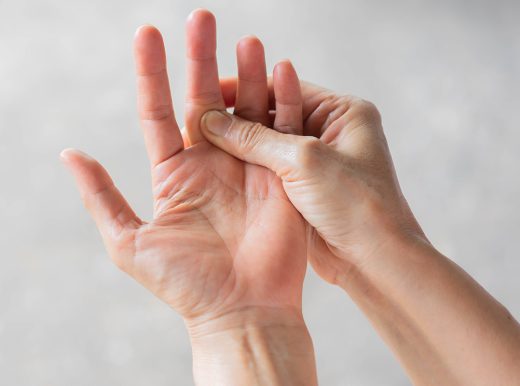
Symptoms of trigger finger: important signs of digitus saltans
Alongside severe pain in the finger concerned, normal mobility is also no longer possible. A bent finger can suddenly no longer be properly extended and, conversely, an extended finger can no longer be properly bent. It then springs back suddenly and uncontrollably into the other position.
Depending on the degree, even that is no longer possible and the finger has to be moved passively. This very unpleasant disorder no longer permits normal use of the hand and restricts the patient considerably.
Causes of a trigger finger
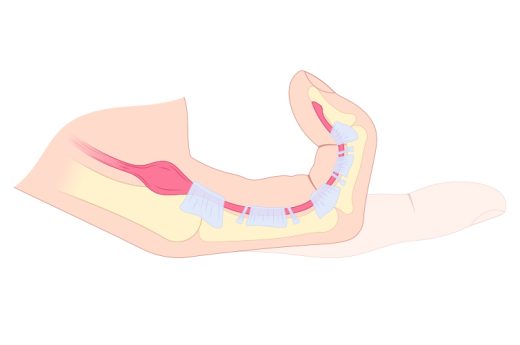
The flexor tendon mentioned above glides back and forth through fine channels known as tendon sheaths. Small annular ligaments hold the tendons along the bone. Through load, but also through various metabolic conditions, the tendons can become inflamed at the transition from the hand to the finger, and nodules form at the annular ligaments.
These nodules then prevent the tendons from moving easily and unhindered through the annular ligaments. In most cases women or certain occupational groups engaged in manual work are affected by a snapping finger.

Treatment of trigger finger - digitus saltans
Depending on the degree, this condition can lead to considerable pain and therefore requires appropriate treatment. In treating a snapping finger, a conservative approach with immobilisation can be chosen first. Anti-inflammatory and pain-relieving medication is administered in addition. With this method very good treatment results are generally already achieved with a trigger finger in Düsseldorf.
If no improvement occurs through conservative treatment, however, surgery could be required. In this procedure the first annular ligament in the flexion crease is divided. The operation is usually carried out as day surgery under local anaesthetic and, when performed by an experienced surgeon, is low in risk. After the procedure the function of the fingers is generally fully restored.
If you suffer from a snapping finger, we will be glad to support you in regaining your quality of life. To discuss this, you can arrange an appointment with us in various ways.

Trigger finger | snapping finger treatment | Orthopädie in Düsseldorf
Frequently Asked Questions: Trigger Finger
How do you get rid of a snapping finger?
Treatment of a snapping finger involves rest, medication such as non-steroidal anti-inflammatory drugs (NSAIDs) to relieve pain and inflammation, physiotherapy exercises to improve mobility, cortisone injections with severe symptoms and, in severe cases, surgery. It is important to see a doctor in order to ensure an accurate diagnosis and suitable treatment.
Can a snapping finger go away on its own?
Yes, in some cases a snapping finger can improve on its own, particularly when the symptoms are mild and the person affected avoids activities that worsen the symptoms. A doctor should always be consulted, however, in order to discuss a suitable treatment strategy, since untreated snapping fingers can lead to permanent restriction of movement.
What is the cause of a snapping finger?
The cause of a snapping finger is usually a thickening in the area of the flexor tendons of the fingers, which makes it more difficult for the tendon to glide through the annular ligaments. This thickening can arise through repeated movements or overuse. At our specialist centre we offer effective diagnosis and treatment options for the snapping finger.
What happens if a snapping finger is not treated?
If a snapping finger is not treated, this can lead to a permanent restriction of movement of the affected finger. The tendon can become so tightly trapped that the finger remains permanently in a bent position (contracture). In addition, persistent inflammation of the tendon sheath can lead to further deterioration. It is therefore important to see a doctor at the first signs of a snapping finger.
How does a snapping finger begin?
A snapping finger often begins with stiffness and an uncomfortable feeling in the finger, particularly in the morning. Sometimes there is a snapping or clicking when the finger is moved. Over time it can become increasingly difficult and painful to bend the finger. In some people the finger can eventually become stuck in a bent or extended position. These problems come from a narrowing of the sheath around the tendon and a thickening of the tendon itself, which makes it harder for the tendon to glide.
How quickly does a snapping finger need surgery?
The necessity and urgency of surgery for a snapping finger depend on the severity of the symptoms and the degree of impairment. In many cases conservative treatment with rest, physiotherapy and medication can be sufficient. Surgery is generally considered only when these measures are ineffective or when the finger remains permanently in a bent position. The decision should always be taken in consultation with a doctor.
Is a snapping finger curable?
Yes, a snapping finger is curable. Treatment can be conservative with rest, physiotherapy exercises and medication or, in more severe cases, by surgery. While the symptoms can subside on their own in some cases, it is always advisable to see a doctor in order to ensure suitable treatment and to avoid permanent restriction of movement.
Which exercises help with a snapping finger?
Exercises for strength and flexibility can help with a snapping finger. These include gently stretching and extending the affected finger, gripping and releasing exercises and moving the finger in a warm water bath. These exercises should always be carried out under the guidance of a physiotherapist in order to avoid further damage. It is important to stop the exercises if pain or discomfort occurs and to see a doctor.
How long does healing take after snapping finger surgery?
The healing time after snapping finger surgery varies depending on individual health and the severity of the case, but can typically range from a few weeks to a few months. As a rule the symptoms improve shortly after the operation, but complete healing and restoration of full function often require physiotherapy and time. It is important to follow the instructions of the doctor and physiotherapist exactly in order to ensure optimal recovery.
Which medicines help with a snapping finger?
Non-steroidal anti-inflammatory drugs (NSAIDs) such as ibuprofen or naproxen can be used with a snapping finger to relieve pain and inflammation. In some cases doctors can also administer a cortisone injection directly into the affected tendon sheath in order to reduce inflammation and make movement easier. All medication should be taken under the guidance of a doctor.
Does health insurance cover treatment for trigger finger?
Yes. Examination, immobilisation, anti-inflammatory medication, cortisone injection and surgical release of the annular ligament are covered by statutory health insurance where medically necessary. We clarify the cost with you in Düsseldorf before the procedure.
More treatments for Shoulder | Arm | Hand
Complaints rarely come alone. We also offer these treatments from the same area in Düsseldorf.