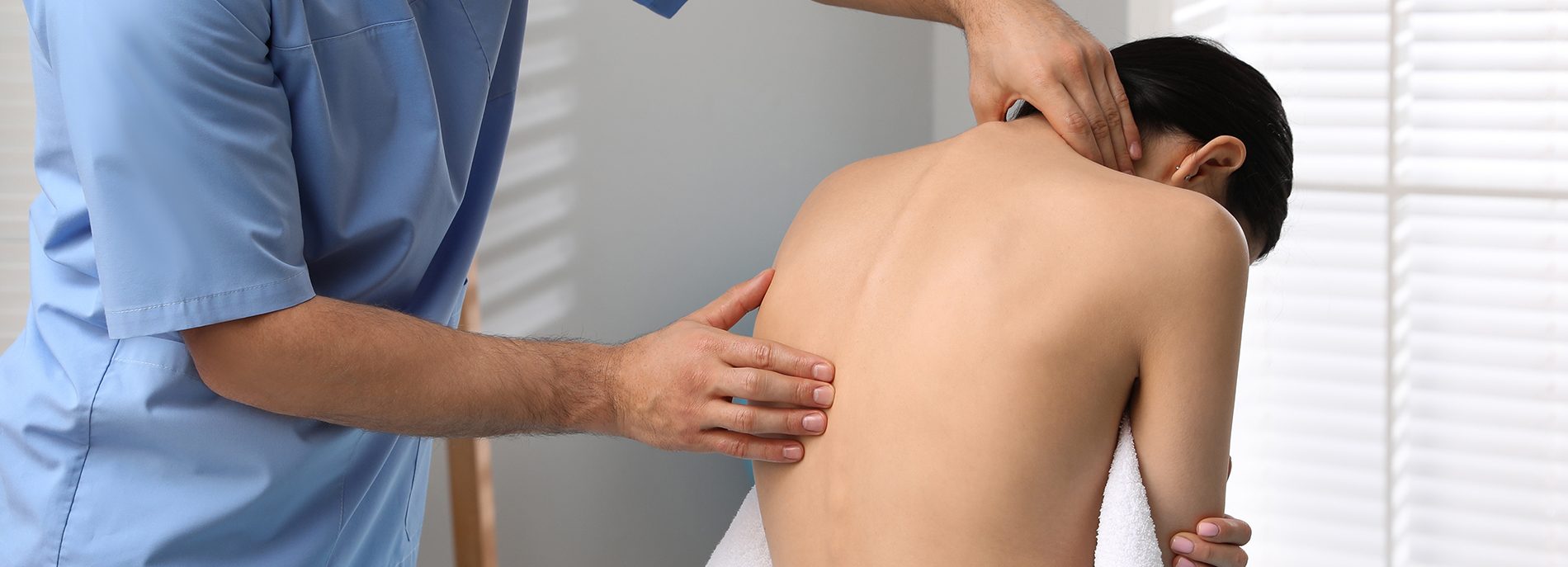
Scheuermann's Disease (Round Back) Treatment in Düsseldorf
Scheuermann’sche Krankheit
Scheuermann's disease is a condition of the spine that occurs primarily in childhood and adolescence, particularly between the ages of 11 and 13. Characteristic of this growth disorder of the spine is the development of a rounded back, often perceived as a hump, above all in the area of the thoracic spine. At our orthopaedic practice in Düsseldorf we offer comprehensive treatment methods for relieving the symptoms of Scheuermann's disease. Our therapeutic approaches include brace therapy, drug treatment, surgical procedures and physical therapies, in order to enable affected patients to achieve a significant improvement in their quality of life.
At our orthopaedic practice in Düsseldorf we attach great importance to responding individually to the needs of each patient. Our experts in brace therapy, surgical therapy, drug treatment and physical therapy work closely together in order to draw up and implement optimal treatment plans.
Answers solely from the contents of this website. Anonymous, no diagnosis.
Causes of Scheuermann's disease
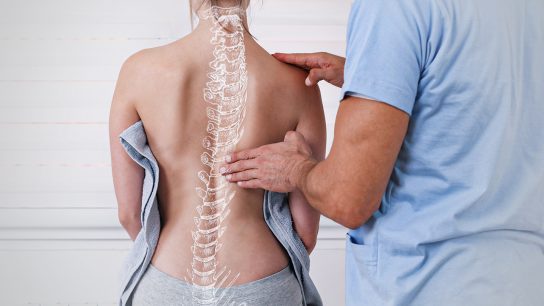
Because of the uneven growth of the spine and the increased pressure on vertebral bodies and discs, the front edge of the vertebral bodies grows more slowly than the rear. This means that the vertebral bodies no longer retain their typical cylindrical shape but gradually take on a wedge shape.
This formation of wedge vertebrae, which always affects several vertebral bodies at once, generally takes place in the thoracic spine. In very rare cases Scheuermann's disease can also occur through a pathological kyphosis (curvature) in the area of the lumbar spine and lead to a pronounced flat back.
Which causes lead to the development of Scheuermann's disease is not precisely known to this day. Alongside overloading of the spine, it is assumed that metabolic conditions can also lead to a deformed spine. Because the condition also occurs more frequently within families, a certain tendency towards Scheuermann's disease appears to be heritable. That does not necessarily mean, however, that the condition will inevitably occur where there is a predisposition.

External risk factors and influences with Scheuermann's disease: how posture, muscle weakness and sport affect the condition
In addition there are some external circumstances and risk factors that can intensify the condition. These include, for example:
- Increased bending load on the spine through long periods of sitting bent forward
- Weak back muscles
- and sports that place strong compressive and twisting loads on the spine.
These factors mean that the vertebral bodies of the lower thoracic spine in particular are loaded more heavily at the front. This can under certain circumstances cause damage to the end plates, which impairs the growth of the vertebrae and can thereby encourage Scheuermann's disease in Düsseldorf.
Symptoms and consequences of Scheuermann's disease
In the early stage Scheuermann's disease frequently causes no pain. The first symptoms generally appear in puberty or only in adulthood. Which symptoms Scheuermann's disease triggers and when depends strongly on whether the thoracic or lumbar region is affected.
In the florid, that is active, stage of the condition, when clearer symptoms in the form of pain or signs of curvature of the spine can be recognised, the condition is marked by a rounded back where the growth disorder is in the area of the thoracic vertebrae. In order to compensate for this incorrect loading of the spine, the lumbar spine frequently arches forward, so that a hollow rounded back develops. If Scheuermann's disease directly affects the lumbar spine, the typical and normal forward curvature of the spine flattens (lordosis) and a flat back develops.
This aesthetic aspect equally represents an indication for treatment, since many people, above all young people, are not satisfied with their outward appearance as a result.
Once the condition of the spine has reached its final stage, further painful complaints and restrictions of movement come to the fore, arising from the incorrect loading and signs of wear of a deformed spine.
The late consequences of Scheuermann's disease include, alongside pain and postural damage, neurological symptoms such as abnormal sensations at certain places on the body. These generally arise through excessive pressure on the nerve pathways. In addition, those affected are more prone to herniated discs in the area of the lumbar spine.
Treatment of Scheuermann's disease
In treating Scheuermann's disease your orthopaedic specialist in Düsseldorf pursues the goal of preventing severe deformation of the spine and relieving your complaints at an advanced stage. Depending on the extent of the condition, different treatment methods come into consideration:
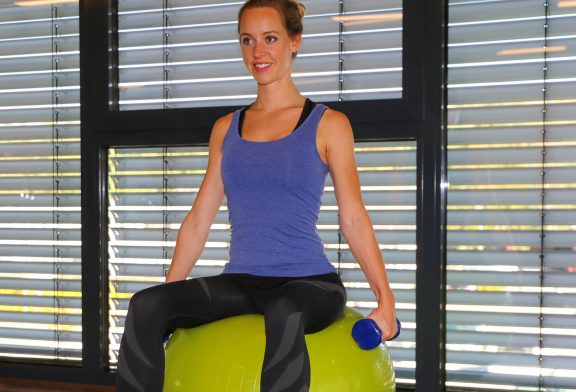
Physikalische Therapie
With the help of physical therapy, that is physiotherapy, muscle groups can be strengthened through targeted exercises and shortened muscle areas can be stretched. In this way the affected areas of the spine can be kept mobile and curvature of the spine counteracted.

Korsetttherapie
From a certain degree of curvature of the spine we recommend wearing a supportive brace in order to stop the condition progressing.

Drug therapy
Although medication can do nothing about the causes of Scheuermann's disease, this method can do something about the symptoms and complaints the condition brings with it. This form of therapy generally helps those affected with acute pain and tension arising from persistent poor posture.
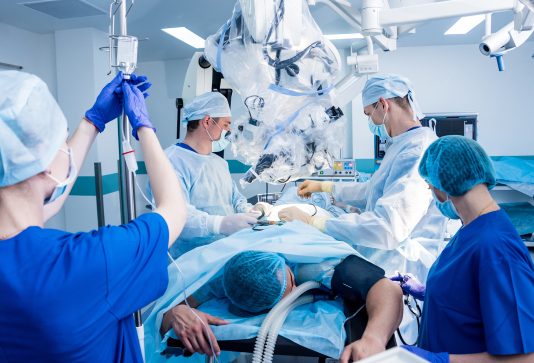
Operative Therapie
With conditions of the spine we always try to use conservative treatment options first. If a certain degree of curvature of the spine has been exceeded, however, or if chronic pain or a restriction of lung function is already present, surgical therapy is often unavoidable for the effective treatment of the complaints.
Benefit from modern treatment methods at our orthopaedic practice in Düsseldorf.
We specialise in the diagnosis and treatment of Scheuermann's disease. This condition should always be looked after by an experienced specialist. Thanks to our many years of expertise we offer targeted and individual care for patients with Scheuermann's disease in Düsseldorf.
Efficient and modern treatment methods for calcific shoulder tendinitis

Competent orthopaedic specialists in Düsseldorf – several practices and a high success rate
Frequently Asked Questions: Scheuermann's Disease
How does Scheuermann's disease arise?
Scheuermann's disease is a growth disorder of the spine that mostly occurs during puberty. The precise cause is unknown, but it is assumed that genetic factors, hormonal influences and mechanical load can play a role.
Is Scheuermann's disease painful?
Scheuermann's disease can be painful, particularly during growth spurts. The pain often arises through load on and deformation of the spine and can worsen over time if the condition is not treated.
Can Scheuermann's disease be trained away?
Training Scheuermann's disease away completely is not possible, since it is a structural change of the spine. Targeted physiotherapy and exercises can, however, help relieve the symptoms and improve the function of the spine.
Does Scheuermann's disease get worse with age?
Scheuermann's disease generally does not progress once bone growth is complete. The changes in the spine can, however, lead to an increased susceptibility to pain and problems later in life, especially if no appropriate treatment takes place.
When is Scheuermann's disease operated on?
Surgery for Scheuermann's disease is generally considered only in severe cases, when there is severe pain or significant functional restriction and conservative therapies have not been successful.
Which sport is good with Scheuermann's disease?
Sports that strengthen the core muscles and promote the flexibility of the spine are beneficial. These include swimming, Pilates and yoga. It is important to avoid sports with high loads or impact on the spine.
Does health insurance cover treatment for Scheuermann's disease?
Examination, X-ray, physiotherapy and a prescribed brace for a pronounced round back are covered by statutory health insurance. Rare surgical correction is also covered where indicated. We inform you in Düsseldorf in advance about possible personal contributions.
How long does treatment of Scheuermann's disease take?
Treatment accompanies growth and therefore usually lasts several years until skeletal maturity is reached. A brace is often worn for eighteen to thirty months. We check the curvature at fixed intervals and adjust the therapy.
Which exercises help with Scheuermann's disease?
Strengthening the back extensors, stretching the chest muscles and hamstrings, and posture training counteract the round back. Swimming, especially backstroke, is well suited. Avoid compressive sports with heavy weights during growth.
More treatments for Spine Surgery
Complaints rarely come alone. We also offer these treatments from the same area in Düsseldorf.