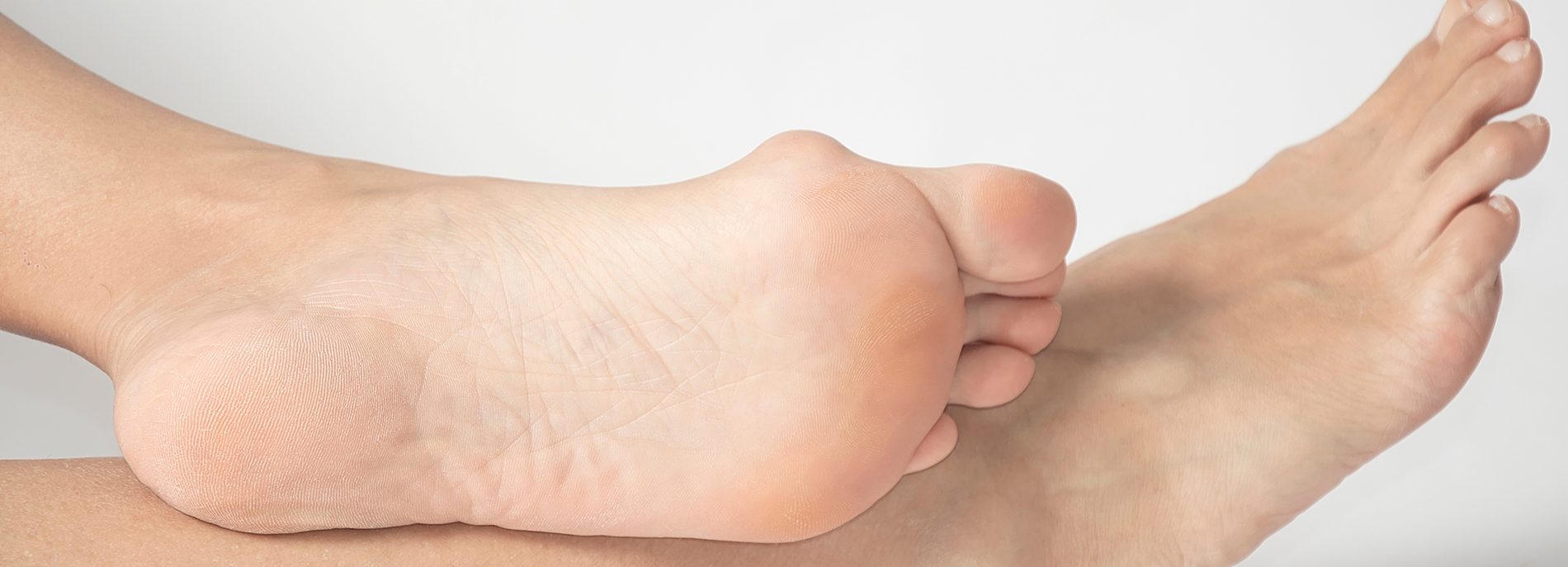
Treatment of hallux valgus in Düsseldorf
Ballenzeh
Hallux valgus, also known as a bunion, is a misalignment of the big toe. The toe bends towards the other toes and can no longer roll properly when walking. This creates pressure against the shoe, which leads to pain over time and greatly impairs quality of life. In eighty per cent of all cases women are affected, mostly from about the age of 50.
Alongside pain, hallux valgus can cause further health problems. A continuing toe misalignment leads to a thickening of the bone of the foot, also called exostosis, which can cause inflammation and skin irritation. Neighbouring toes can also be affected, with consequences such as corns and bony growths. Osteoarthritis of the joint at the base of the big toe can also arise through uneven pressure distribution. The precise cause of hallux valgus is unclear, but genetic factors, tight or high-heeled footwear and foot misalignments could play a role.
Answers solely from the contents of this website. Anonymous, no diagnosis.
What leads to hallux valgus?
Alongside a family predisposition, the cause of hallux valgus in Düsseldorf frequently lies in footwear that damages the foot. Years of wearing shoes that are too tight or very pointed constrict the big toe and bend it unnaturally towards the outer side of the foot. It can also happen that people with a pronounced splayfoot subsequently develop hallux valgus.
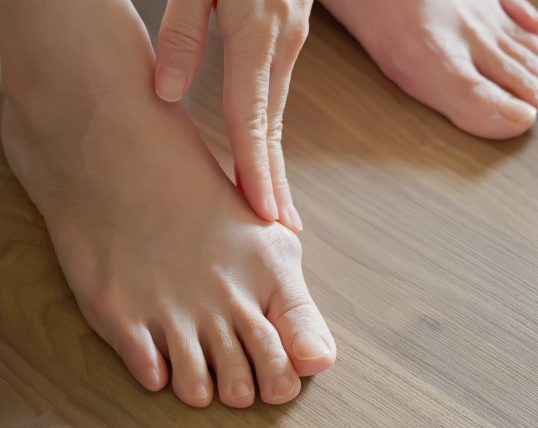
Complaints caused by hallux valgus
Apart from the fact that such a misalignment is already very troubling for aesthetic reasons, hallux valgus causes complaints for most affected patients. When rolling the foot forward, weight shifts towards the lesser toes, which are literally displaced and also begin to hurt.
Not infrequently, swelling also develops at the joint capsule of the big toe, which is inflamed and therefore painful. This changes the patient's gait pattern, which in turn can lead to misalignment of the hip joint, the knees and the ankle joint.

Treatment of hallux valgus
Depending on the degree, custom-made orthopaedic footwear, orthoses and insoles can guide the toe back into a tolerable direction conservatively. In most cases, however, hallux valgus has already progressed so far that surgery becomes unavoidable. There are now about 30 variants of hallux valgus surgery, but all follow a similar basic principle. What matters is not only guiding the bone back in the right direction, but also returning tendons and joint capsules that have been stretched by the misalignment to their correct position.
Your orthopaedic specialist in Düsseldorf tries to carry out such an operation as minimally invasively as possible and avoids the use of metal implants for fixation. These are unavoidable, however, with particularly advanced hallux valgus. Once healing is complete, metal implants or screws can be removed again in a further operation, because the results are permanent.
Risks from hallux valgus
Treatment of hallux valgus in Düsseldorf should not be postponed for too long, above all because conservative treatment can be carried out at an early stage and surgery does not become necessary. Apart from that, the development of severe pain and further misalignment of the neighbouring joints is also avoided.
Because hallux valgus produces a certain unsteadiness of gait over time, the danger of falling is a real problem. Older patients in particular who suffer from this misalignment have an increased risk of falling with serious consequences such as a fractured neck of femur.
If you suffer from hallux valgus, you should place yourself in the hands of an experienced foot surgeon, because this diagnosis will certainly not disappear on its own without appropriate treatment.
Please arrange an appointment at our practice online or call us during our consultation hours directly on the telephone number of the relevant practice. We will advise you in detail and individually about the options for hallux valgus treatment in Düsseldorf, so that you can walk with ease again.

Efficient and modern treatment methods for calcific shoulder tendinitis

Competent orthopaedic specialists in Düsseldorf – several practices and a high success rate
Frequently Asked Questions: Hallux Valgus (Bunion)
Can hallux valgus recede again?
A hallux valgus that already represents a significant misalignment of the big toe will generally not recede on its own. There are, however, conservative treatments that can help slow the progression of the condition and relieve the symptoms. These include the use of special shoes or insoles, physiotherapy and toe spreaders. In advanced cases surgery may be required in order to correct the misalignment.
What happens if hallux valgus is not treated?
If a hallux valgus remains untreated, the misalignment of the toe can progress further and cause increasing pain and discomfort. This can impair mobility and lead to difficulty walking and standing. In addition, an untreated misalignment can cause other problems such as corns, calluses or even arthritis.
Can hallux valgus be trained away?
An existing hallux valgus cannot be corrected by training alone, but certain exercises can help strengthen the muscles, increase mobility and relieve pain. Physiotherapy can also help slow the progression of the misalignment.
What are the best shoes with hallux valgus?
With hallux valgus it is important to choose shoes that offer plenty of room for the toes and place no pressure on the bunion. Shoes with a wide toe box and a flexible sole are often the best choice. It can also be helpful to use orthopaedic insoles in order to support the foot and distribute pressure evenly.
What should be avoided with hallux valgus?
With hallux valgus you should avoid wearing tight, pointed shoes and high heels, as these increase pressure on the toe and can worsen the misalignment. Long periods of standing or walking that lead to increased load on the feet should also be avoided.
Are barefoot shoes good with hallux valgus?
Barefoot shoes can be beneficial with hallux valgus, as they generally offer a wide toe box that allows the toes to move and spread naturally. You should always make sure, however, that the shoes are comfortable and place no additional pressure on the affected area.
How long should toe spreaders be worn?
The recommended wearing time for toe spreaders can vary, but many specialists recommend starting with short periods of about 15 to 30 minutes and increasing the wearing time gradually, depending on how comfortable they feel. It is important to follow the instructions of the manufacturer or a medical specialist and to stop wearing the toe spreaders if pain or discomfort occurs.
Does health insurance cover treatment for hallux valgus?
Examination, X-ray, prescribed insoles, orthoses and medically necessary surgery are covered by statutory health insurance. Purely cosmetic procedures are not covered. We check your entitlement and tell you the cost in Düsseldorf in advance.
How long does recovery take after hallux valgus surgery?
You normally wear a post-operative shoe for about six weeks. Normal footwear becomes possible step by step after that, and sport usually after three to four months. Residual swelling can persist for several months, which is normal.
Which exercises help with hallux valgus?
Spreading the toes, gripping exercises with the toes and stretching the big toe keep the joint mobile and strengthen the foot muscles. Toe spreaders and flat, wide shoes provide additional support. An existing misalignment cannot be reversed this way, but its progression can be slowed.
More treatments for Foot | Ankle
Complaints rarely come alone. We also offer these treatments from the same area in Düsseldorf.