
Treating Hallux Rigidus (Big Toe Osteoarthritis) in Düsseldorf
Osteoarthritis of the big toe joint
Hallux rigidus is a condition affecting the big toe. When the toe can no longer be moved properly, or not at all, because it has become stiff, rolling the foot forward becomes difficult and causes pain. Every step is felt as painful, which reduces quality of life.
Hallux rigidus is a condition affecting the big toe. When the toe can no longer be moved properly, or not at all, because it has become stiff, rolling the foot forward becomes difficult and causes pain. Every step is felt as painful, which reduces quality of life. This state arises through the deterioration of the joint cartilage in the big toe, which leads to progressive stiffness and pain. It is a form of osteoarthritis that primarily affects the joint at the base of the big toe. In advanced cases the pain can be permanent and severely restrict mobility. Treatment strategies include conservative measures such as pain management and physiotherapy exercises, but in severe cases surgical intervention may be required.
Answers solely from the contents of this website. Anonymous, no diagnosis.
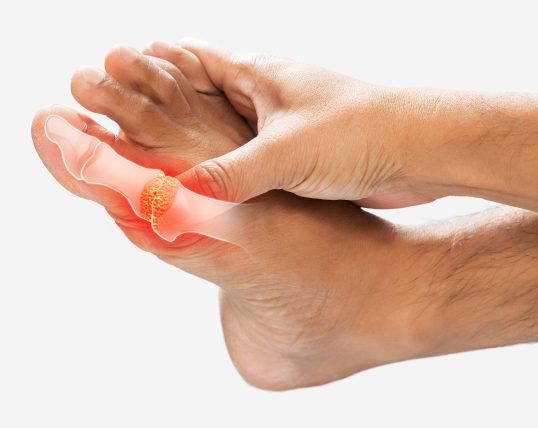
How does hallux rigidus arise?
The stiff big toe is a wear-related condition that can also arise as a result of osteoarthritis. The painful loss of movement arises in the base joint, which causes pain and inflammation through swelling of the joint surfaces and can lead to complete stiffening.
Smaller injuries of the joint surface as well as heavy load, for example in athletes, and simultaneous misalignment when rolling the foot forward over a longer period, can also be possible causes of this condition.
Quite simply, the wrong running shoes can also be responsible. In many cases, however, the cause remains a mystery. It is assumed that there are also genetic reasons for the development of hallux rigidus.
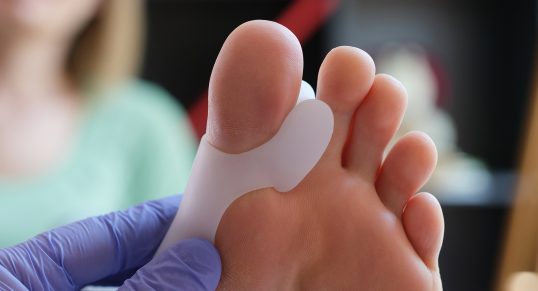
Complaints with hallux rigidus
Affected patients often adopt a protective posture when walking and thereby unnoticed create misalignment of neighbouring joints. Apart from the fact that the base joint is sensitive to pressure and painful when swollen, functional problems of the hip, the knee joint, the cervical and lumbar spine and the ankle are not uncommon. Over time the patient enters a vicious circle with their complaints. Whenever they try to avoid one kind of complaint, they run into the next painful impairment.
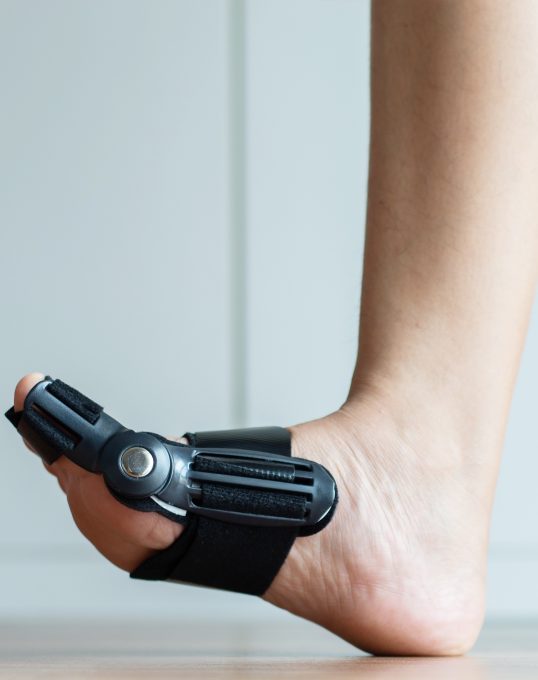
Treatment for hallux rigidus
First of all a move should certainly be made to shoes with a larger toe box. They reduce pressure on the forefoot and therefore on the big toe. Orthopaedic insoles also bring relief for the base joint of the toe. Medically supervised use of anti-inflammatory medication is a further option for counteracting swelling and pain.
In order to regain the function of the base joint, surgery may be unavoidable depending on the degree and stage of the condition. Here the cartilage is smoothed and a titanium plate or even an artificial base joint is fitted. Depending on the extent of the operation and the method used, rehabilitation takes between four and fourteen days. An attempt should always be made, however, to treat hallux rigidus in Düsseldorf conservatively first. This also includes physiotherapy.
If you recognise in yourself the impairments to walking and running described above and would like a reliable diagnosis, please place yourself in our experienced surgical hands.
Efficient and modern treatment methods for calcific shoulder tendinitis

Competent orthopaedic specialists in Düsseldorf – several practices and a high success rate
Frequently Asked Questions: Hallux Rigidus
Can hallux rigidus be cured?
Hallux rigidus is a form of osteoarthritis and cannot currently be cured completely. Treatment concentrates on relieving the symptoms and improving the mobility of the joint. In some cases surgery may be necessary in order to improve quality of life.
Can hallux rigidus recede?
It is unlikely that hallux rigidus will recede on its own, since it is a progressive condition. Early intervention, such as changes of footwear or physiotherapy exercises, can help slow the progression of the condition and relieve the symptoms.
When does hallux rigidus require surgery?
Surgery may be considered when conservative treatment methods are not sufficient to relieve the symptoms. This can be the case when the pain is permanent, mobility is severely restricted, or quality of life is considerably impaired.
How long does hallux rigidus last?
Hallux rigidus is a chronic condition, which means it is long-term and generally progresses over time. The duration and severity of the symptoms can vary from person to person, however.
Which shoes are good with hallux rigidus?
Shoes with a wide toe area, good support and a low to moderate heel height are generally best suited for people with hallux rigidus. Orthopaedic shoes or insoles can also be helpful.
How do I get my toes straight again?
In mild to moderate cases of hallux rigidus, physiotherapy exercises, toe spreaders or orthopaedic shoes can help realign the toe and improve function. In severe cases, or when other treatments are not effective, surgery may be necessary.
Is hallux rigidus osteoarthritis?
Yes, hallux rigidus is a form of osteoarthritis that affects the joint at the base of the big toe. It is a degenerative condition in which the cartilage lining the joint gradually wears away, which leads to pain and stiffness.
Does health insurance cover treatment for hallux rigidus?
Examination, X-ray, prescribed insoles with a rocker sole, anti-inflammatory medication and any necessary surgery are covered by statutory health insurance. We inform you in Düsseldorf in advance about possible personal contributions for special shoe adaptations.
How long does recovery take after surgery for hallux rigidus?
Depending on the procedure, rehabilitation takes between four and fourteen days until everyday load is possible. Full load-bearing and sporting activity are usually possible again after two to three months. The course depends on the stage of the osteoarthritis and on the procedure chosen.
Which exercises help with hallux rigidus?
Careful movement of the big toe in flexion and extension, stretching the calf muscles and foot exercises preserve the remaining mobility. Avoid painful rolling movements and use shoes with a rocker sole instead. Have a physiotherapist adapt the programme for you.
More treatments for Foot | Ankle
Complaints rarely come alone. We also offer these treatments from the same area in Düsseldorf.