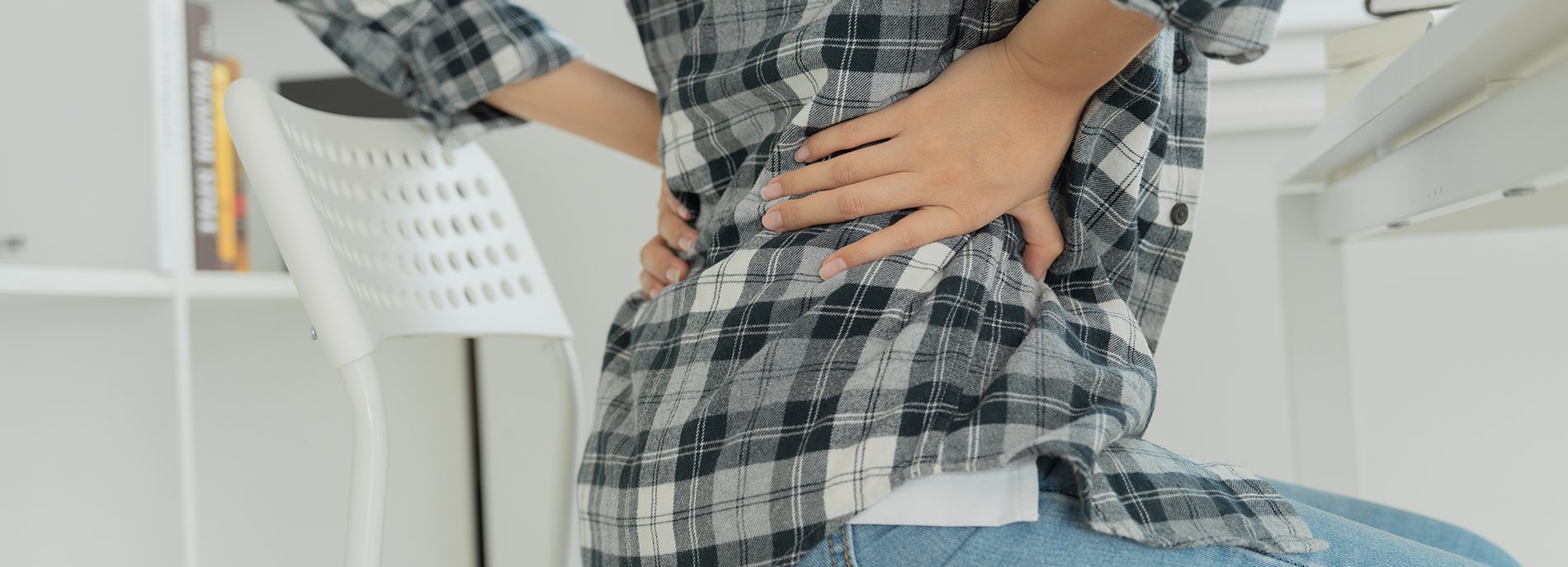
Treatment of herniated discs of the lumbar spine at our orthopaedic practices in Düsseldorf
The lumbar spine forms the lower part of the spine and consists of 5 vertebrae. The discs, which lie as buffers between the vertebrae, consist of a soft gelatinous nucleus and an outer fibrous ring. With a herniated disc of the lumbar spine, also known as a lumbar disc herniation, the inner nucleus of the disc moves out of position and can thereby lead to a range of complaints.
With a herniated disc of the lumbar spine, the displaced gelatinous nucleus can press on surrounding nerves, which triggers pain and possibly numbness or weakness in the lower limbs. These symptoms are often referred to as sciatica. The complaints vary, however, according to the size and location of the herniation, and not every herniated disc causes pain. In some cases they are even discovered only by chance during medical examinations. Treatment approaches range from painkillers and physiotherapy through to surgical procedures.
Answers solely from the contents of this website. Anonymous, no diagnosis.
Symptoms of a herniated disc of the lumbar spine and the treatment by experienced orthopaedic specialists at our orthopaedic practices in Düsseldorf
A herniated disc in the lumbar spine can be problematic because of its steep configuration and can impair the stability of the spine. Damage in this area can make movement more difficult and cause misalignment of the vertebrae, which leads to overloading of the surrounding vertebrae and discs.
Herniated discs in this area frequently occur between the 4th and 5th lumbar vertebrae or between the 5th lumbar vertebra and the sacrum, where the sciatic nerve also runs. Irritation of this nerve by the herniated disc can cause sciatic pain, which radiates from the spine across the buttock into the legs and can cause numbness or tingling.
If the complaints do not recede in the course of conservative therapy, there is then an indication for surgery. We will be glad to advise you personally about the treatment options for a herniated disc of the lumbar spine in Düsseldorf. Arrange an appointment online or call us during our consultation hours directly on the telephone number of the relevant practice. We are always glad to be here for you.

Treatment of a lumbar herniated disc
The prognosis with a lumbar herniated disc is good. Your orthopaedic specialist in Düsseldorf can treat a large proportion of herniations conservatively with rest and physiotherapy. The pain and any accompanying inflammation of the nerve root irritated by the herniated disc can be relieved by pain-relieving medication or a targeted infiltration.
Surgical treatment of a herniated disc of the lumbar spine becomes necessary only when it has led to severe paralysis. Time is then the decisive factor above all. The longer the pressure on the nerves persists, the lower the probability that the nerves will recover and the paralysis will subside. With neurological deficits a surgical procedure is therefore indicated without delay.
Two surgical methods come into consideration for disc surgery: spinal fusion (spondylodesis) or the use of a disc prosthesis, through which the mobility and flexibility of the affected sections of the spine can be preserved.

Efficient and modern treatment methods for calcific shoulder tendinitis
Competent orthopaedic specialists in Düsseldorf – several practices and a high success rate
Frequently Asked Questions: Lumbar Disc Herniation
What should you avoid with a herniated disc of the lumbar spine?
Avoid heavy physical activity and abrupt movements that place additional pressure on the spine. Smoking and alcohol should also be avoided, as they can impair healing.
With a herniated disc, is it better to sit or to lie down?
In general lying down is better, because it reduces the pressure on the spine. Sitting for too long can put pressure on the disc. Even so, longer periods of lying down should be combined with occasional movement in order to strengthen the muscles and avoid tension.
What treatment options are there for a herniated disc?
Treatment options can include conservative measures such as physiotherapy, painkillers, injections, occupational therapy and exercise programmes. In severe cases surgery can be considered.
How long does it take for a herniated disc to heal?
The healing time varies from person to person and depends on the severity of the herniation. In general the healing process can take from a few weeks to several months.
What is the best painkiller for a herniated disc?
The type of painkiller depends on the severity of the symptoms. Non-steroidal anti-inflammatory drugs (NSAIDs) such as ibuprofen are often used. In some cases stronger painkillers such as opioids may be needed. They should always be taken under medical supervision.
Which exercises should be avoided with a herniated disc?
Avoid exercises that place heavy strain on the lower back, such as heavy squats, deadlifts or any kind of exercise in which you have to bend or twist strongly.
Is walking good for the disc?
Yes, gentle walking can promote circulation and support healing. It is important, however, to listen to your body and to take a break if pain occurs.
How should you sleep at night with a herniated disc?
Try to sleep on your side with a pillow between your knees. This can help keep the spine in a neutral position and reduce the pressure on the disc.
When does a nerve recover after a herniated disc?
Nerve regeneration after a herniated disc can take a few weeks to months, depending on the severity of the injury and the individual healing rate of the body. In some cases it can take up to a year for the nerve to heal completely.
Does health insurance cover treatment for a lumbar disc herniation?
Diagnostics, physiotherapy, pain management and medically necessary disc surgery on the lumbar spine are covered by statutory health insurance. Some supplementary procedures may be billed privately. We inform you in Düsseldorf before treatment begins.
Which exercises help with a lumbar disc herniation?
Back-friendly strengthening of the trunk muscles, the step position to relieve the nerve root and regular walking support recovery. Avoid heavy lifting with a rounded back and prolonged sitting during the acute phase. A physiotherapist puts together your programme.
More treatments for Spine Surgery
Complaints rarely come alone. We also offer these treatments from the same area in Düsseldorf.