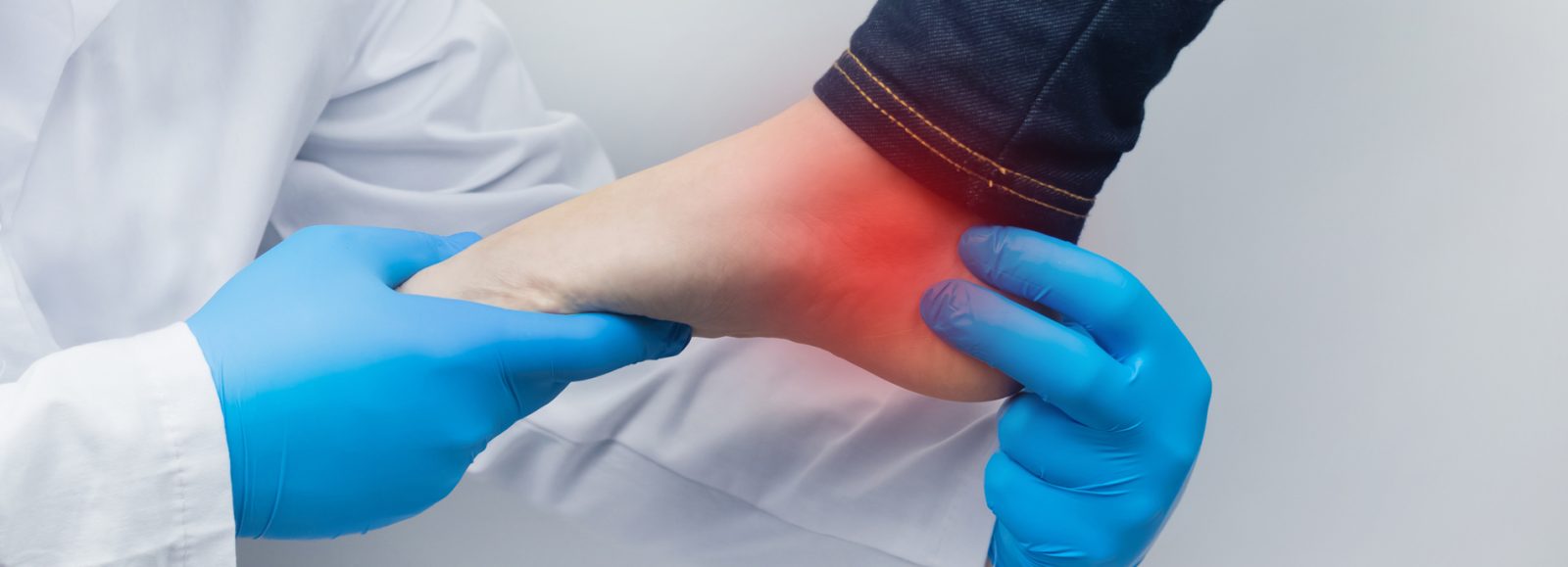
Treatment of Heel Spur (Plantar Fasciitis) in Düsseldorf
A heel spur is a thin bony outgrowth on the heel bone. It often goes together with an inflammation of the tendon plate of the sole, known as plantar fasciitis. Those affected complain of a stabbing pain when putting weight on the foot. In the early stage this quickly subsides again after the first steps in the morning, but it usually returns regularly after a night's rest. If the heel spur remains untreated, the pain can eventually be felt every time weight is placed on the foot.
Your orthopaedic specialist in Düsseldorf offers a wide range of treatment methods; a surgical procedure is generally not required. In principle, however, a heel spur should be treated orthopaedically as early as possible so that persistent pain does not develop. An important and contemporary therapeutic aid is shockwave therapy. If you are looking for an experienced orthopaedic specialist for heel spur in Düsseldorf, you are in good hands with us.
Answers solely from the contents of this website. Anonymous, no diagnosis.
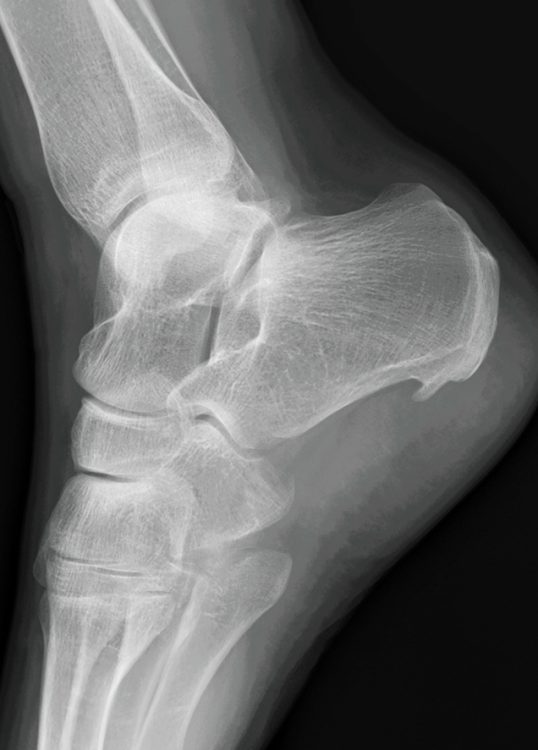
Causes of heel spur: the influence of orthopaedic expertise in Düsseldorf
A heel spur, a bony growth on the heel bone, can be caused by factors such as excessive pressure on the feet, foot misalignment or ageing. Orthopaedic specialists in Düsseldorf specialise in the diagnosis and treatment of this condition.
After a thorough examination and diagnosis, the orthopaedic specialists draw up an individual treatment plan. This can involve conservative treatment approaches such as physiotherapy or special shoe insoles. If improvement is not sufficient, minimally invasive procedures or surgery can be considered.
If you have pain in the heel area you should arrange an appointment with an orthopaedic specialist in Düsseldorf. Acting early can bring relief and support you on the way to a pain-free lifestyle.
Incorrect loading of the feet leads to inflammation at the attachment of the plantar fascia, through which local calcium deposits can form. Common reasons for the overloading of tendon attachments include excess weight, anatomically unsuitable footwear, standing on hard floors for too long, a familial tendency and sporting activity without warming up beforehand.
Orthopaedic treatment for heel spur at our orthopaedic practices in Düsseldorf
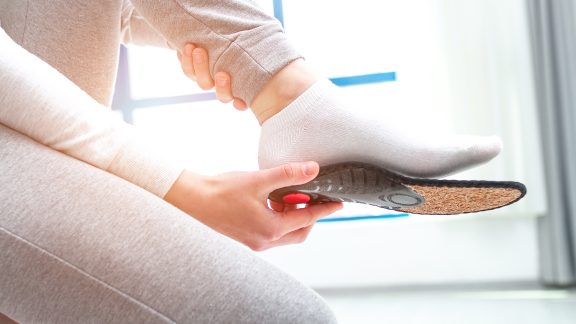
Perfected shoe insoles: one step ahead
At our orthopaedic practices we concentrate on offering you the best comfort and support for your feet. With individually fitted shoe insoles we ensure that your feet receive the support they need in order to relieve pain and promote the healing process.
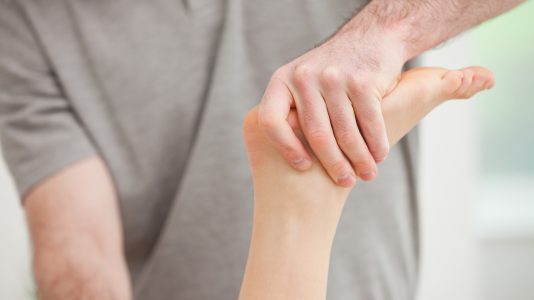
Optimal mobility: stretching exercises for tendons
Healthy tendons are decisive for comfortable movement. At our orthopaedic practices we offer special stretching exercises for the tendons in order to promote flexibility, prevent injury and support a rapid recovery.
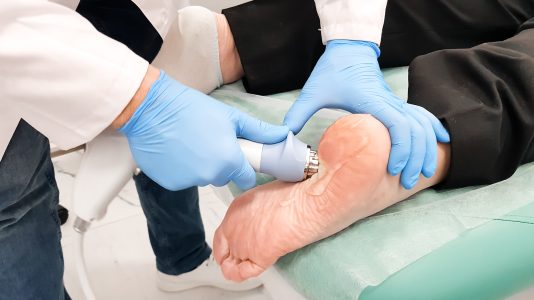
Cooling relief: cold applications
Our orthopaedic practices in Düsseldorf use cold applications specifically in order to relieve pain and reduce swelling. This effective treatment is a fundamental part of our holistic approach to pain management and rehabilitation.
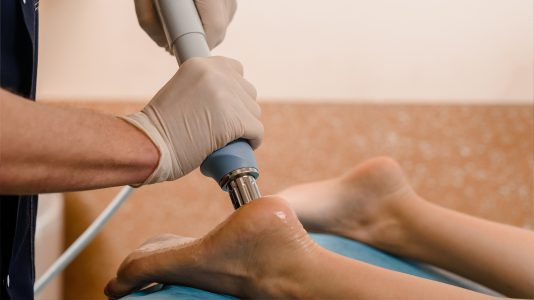
Innovative pain relief: shockwave therapy
Our practices in Düsseldorf offer advanced shockwave therapy in order to treat deep-seated pain effectively. This non-invasive treatment helps stimulate the healing process and improve freedom of movement.

Bedarfsgerechte Schmerzkontrolle: Individuell abgestimmte Schmerzmittel
When the pain becomes unbearable, our practices in Düsseldorf are ready to offer patients painkillers as needed. We take a responsible approach to pain management in order to minimise side effects and ensure effective relief.
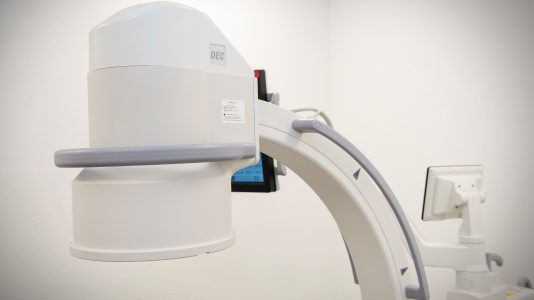
Precision diagnostics: low-dose radiotherapy
Our team in Düsseldorf uses the latest technology such as low-dose radiotherapy in order to make accurate diagnoses and draw up effective treatment plans. We strive to offer you comprehensive care on your way to recovery.
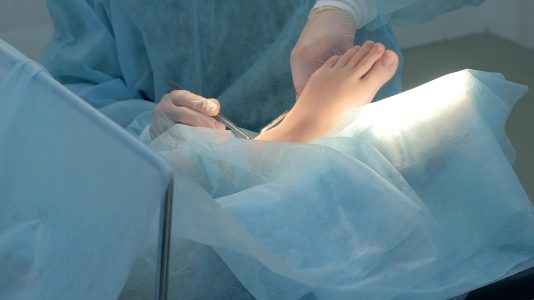
Surgical expertise: the last resort for pain relief
With chronic or severe orthopaedic problems, surgical removal can be the last resort. Our experts in Düsseldorf are trained in the latest surgical technique and use this knowledge in order to give you the best possible recovery.
Fast and efficient help with heel spur
Individually custom-made shoe insoles can compensate for incorrect loading to a large extent. With the right stretching exercises the pain of a heel spur can also be counteracted. Once a heel spur has formed, however, shockwave therapy is often recommended in addition in order to restore a lastingly pain-free state.
Even a heel spur only a few millimetres long can trigger extremely unpleasant pain when weight is placed on the foot. Focused shockwave therapy specifically improves circulation in the affected area. Through complex reactions the deposited tissue is broken down and can finally be carried away by the body again. As a rule, four to five treatments of about ten minutes each are sufficient to treat a heel spur adequately.
Extracorporeal shockwave therapy (ESWT) for pain reduction, faster healing and the release of muscle tension at our practice in Düsseldorf
Frequently Asked Questions: Heel Spur
What helps quickly with a heel spur?
For immediate relief of the pain caused by a heel spur, painkillers such as ibuprofen or paracetamol can be used. In addition, wearing custom-made insoles or heel cushions that relieve pressure on the affected area can be helpful. It is also important to avoid excessive load by distributing weight evenly on both feet and wearing suitable footwear.
What does the orthopaedic specialist do for heel pain?
The orthopaedic specialist will first carry out a thorough examination in order to determine the cause of the heel pain. This can involve a physical examination, an ultrasound examination or an X-ray. Based on the results of the examination, the orthopaedic specialist can suggest various treatment options, such as physiotherapy, painkillers, orthopaedic insoles or, in severe cases, surgery.
How do I get rid of inflammation in the heel?
Inflammation in the heel can be relieved by rest, ice, compression and elevation (the RICE rule). Anti-inflammatory medication and painkillers can additionally contribute to relieving the symptoms. In some cases it may be necessary to undergo physiotherapy or other special treatment. In severe cases surgery may be necessary.
Which exercises help with heel pain?
Exercises that can help relieve heel pain are often aimed at stretching and strengthening the muscles and tendons in and around the foot. Some examples are rolling a golf ball or tennis ball under the foot, stretching the Achilles tendon and strengthening the foot muscles through toe-curling exercises. A physiotherapist can recommend a series of specific exercises tailored to your individual needs.
What does a heel spur feel like?
A heel spur can make itself felt through a stabbing or burning pain in the heel, particularly when first getting up in the morning or after longer periods of rest. The pain can improve over the course of the day, but often becomes worse again through long periods of walking or intensive standing. In some cases, however, a heel spur can also be asymptomatic, meaning it causes no pain.
Does health insurance cover treatment for a heel spur?
Examination, X-ray, physiotherapy and custom-made insoles are covered by statutory health insurance. Focused shockwave therapy for heel spur is a private service and is usually billed privately. We tell you the cost in Düsseldorf before treatment begins.
How long does treatment of a heel spur take?
With insoles, stretching exercises and rest the complaints often improve within two to three months. Shockwave therapy usually requires four to five sessions of about ten minutes. Chronic cases need patience but respond well to combined treatment.
More treatments for Foot | Ankle
Complaints rarely come alone. We also offer these treatments from the same area in Düsseldorf.