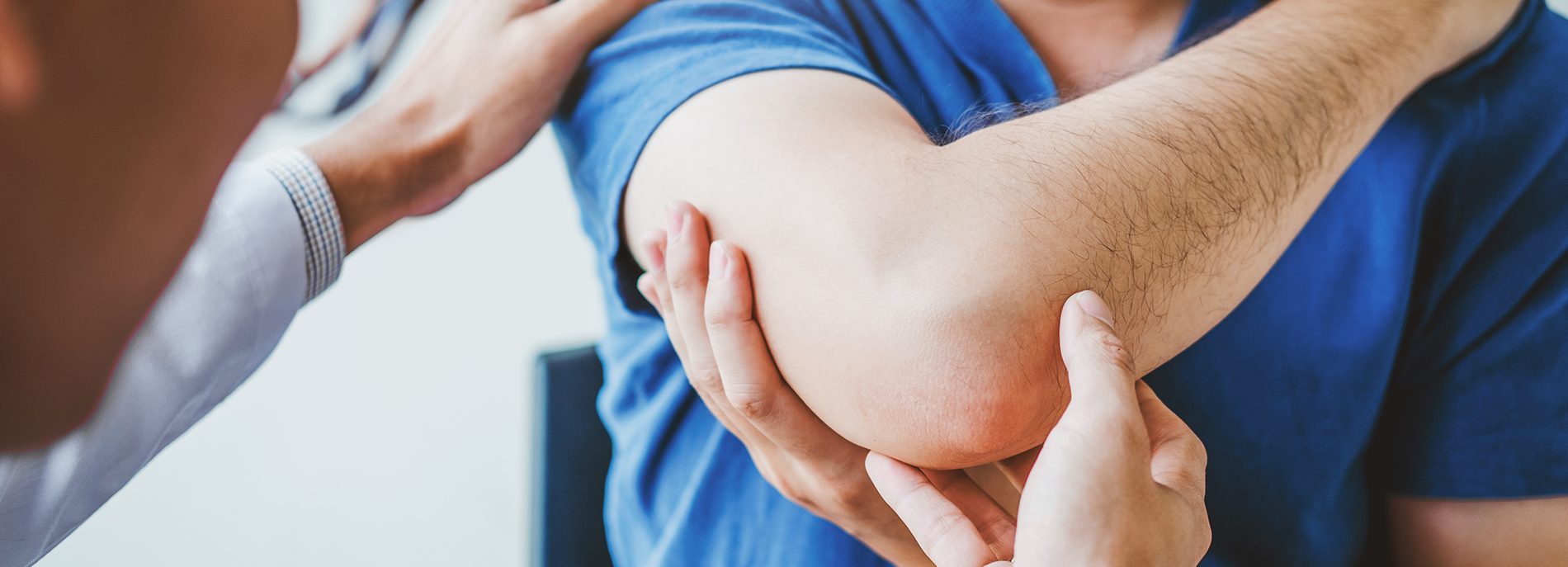
Treating Tennis Elbow and Lateral Epicondylitis in Düsseldorf
If you suffer from tennis elbow (epicondylitis humeri radialis) and are looking for expert treatment in Düsseldorf, you have come to the right place. Our orthopaedic practice has the specific expertise to help you with this condition. Our attentive doctors use the latest treatment methods to relieve pain and restore the function of your arm.
Tennis elbow (epicondylitis humeri radialis), also known as lateral elbow pain, is an inflammation of the tendons on the outer elbow caused by overloading the wrist and forearm muscles. This may be acute or chronic overloading that arises through constant or unaccustomed strain. Although the name suggests otherwise, such tendon overload can therefore also affect people who do not play sport.
Answers solely from the contents of this website. Anonymous, no diagnosis.
Causes and signs of tennis elbow
The cause of tennis elbow is overloading of the tendon, in which the tendon attachments of the extensor muscles of the forearm, which originate above the elbow joint on the outer side of the upper arm bone, are irritated by excessive strain. The tissue becomes inflamed.
People who frequently perform the same arm or hand movement at work or during sport are especially likely to develop tennis elbow. Those affected by tennis elbow usually feel severe pain around the elbow. This pain increases over time, particularly when the wrist is pressed upwards against resistance. The pain can also radiate into the hand and show itself as a feeling of weakness in the wrist.
How is tennis elbow treated?
Conservative treatment often helps to relieve the pain and complaints of tennis elbow. It is important to rest the arm, and depending on the condition, applying cold or heat can provide relief.
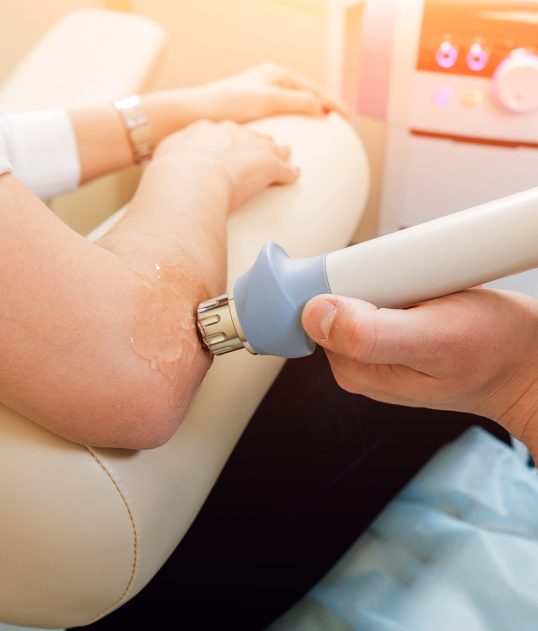
Focused shockwave therapy is one of the effective treatment options your orthopaedic specialist in Düsseldorf offers. This method works deep in the tissue, concentrates the energy at the painful point and thereby provides effective pain relief.
Another proven method is induction therapy. This treatment is particularly effective and can quickly lead to an improvement of the complaints.
Supportive bandages and braces as well as the infiltration of medication can also help relieve the complaints. After such conservative treatments, physiotherapy is usually required, because the affected tendons are often shortened.
If these conservative methods do not achieve the desired result, surgery may be necessary in some cases.
Treating tennis elbow effectively with shockwave therapy in Düsseldorf
Do you suffer from tennis elbow? Our Düsseldorf practice offers advanced shockwave therapy, which relieves pain and speeds up healing. This non-invasive procedure, carried out by our professional team, delivers fast results and improved mobility. Rely on the latest treatment methods, we are here for you.
Let us treat you with modern methods at our orthopaedic practice in Düsseldorf.
We are experts in the treatment of shoulder impingement syndrome. The diagnosis and treatment of impingement syndrome should always be carried out by an experienced specialist. At our practice too we are geared specifically towards patients with impingement syndrome in Düsseldorf, with a great deal of experience.
Efficient and modern treatment methods for calcific shoulder tendinitis

Competent orthopaedic specialists in Düsseldorf – several practices and a high success rate
Frequently Asked Questions: Tennis Elbow
How long does it take for tennis elbow to go away?
Healing of tennis elbow can take varying amounts of time, often several weeks to months. The earlier treatment begins, for example with shockwave therapy, the faster tennis elbow can heal. With us you can be treated quickly and effectively so that you become free of symptoms as soon as possible.
Is tennis elbow an inflammation?
Yes, tennis elbow (also called lateral epicondylitis) is an inflammation that mainly affects the tendons and muscles around the outer elbow. Although the name points to tennis, tennis elbow can also occur in people who do not play tennis. The inflammation arises from repeated strain or overuse of the tendons, which leads to micro-injuries. This triggers an inflammatory reaction in which the tendon attachments at the elbow become painful and inflamed. The symptoms of tennis elbow include pain, tenderness and restricted movement around the outer elbow. Treatment aims to reduce the inflammation, relieve pain and strengthen the affected muscles and tendons.
Which home remedy helps with tennis elbow?
There are various home remedies that can help relieve the symptoms of tennis elbow. One proven method is cold and heat therapy. Cold packs or ice compresses can help reduce pain and inflammation by narrowing the blood vessels and reducing swelling. Heat therapy, such as warm compresses or a warm bath, can improve circulation, promote muscle relaxation and support healing. Applying pain-relieving ointments or anti-inflammatory creams to the affected area can also provide temporary relief. In addition, regular stretching and strengthening exercises aimed specifically at tennis elbow can support the healing process. It is important to note, however, that home remedies cannot replace medical diagnosis and treatment. If symptoms persist or worsen, it is advisable to see a doctor in order to receive suitable treatment.
Which exercises are good for tennis elbow?
Stretching exercises are particularly helpful for tennis elbow. One effective exercise is the extended forearm stretch: extend the affected arm fully and turn the palm downwards so that the back of the hand points upwards. With the other hand, take hold of the back of the hand and gently pull the fingers towards you so that a stretch develops in the forearm. It is important that the elbow stays straight. Hold this position for about 30 seconds and repeat the exercise several times. Please perform every exercise slowly and without jerky movements, and stop immediately if pain occurs. It is advisable to consult a doctor or physiotherapist before starting the exercises.
What happens if tennis elbow is not treated?
If tennis elbow is left untreated, there is a risk that the symptoms will worsen and become chronic. Untreated tennis elbow can lead to persistent pain, restricted movement and impairment of everyday activities. The inflammation and damage to the tendons can worsen, which leads to a further deterioration of the complaints. In some cases untreated tennis elbow can lead to tendon tears or tendon detachment, which may require more intensive treatment such as surgery. It is therefore important to seek early diagnosis and suitable treatment when symptoms of tennis elbow persist, in order to avoid complications and enable a faster recovery.
Which tablets help with tennis elbow pain?
For tennis elbow pain, non-steroidal anti-inflammatory drugs (NSAIDs) can be helpful in relieving pain and inflammation. These include medicines such as ibuprofen, naproxen or diclofenac. These medicines work by reducing the production of certain inflammatory substances in the body. It is important, however, to discuss taking medication with a doctor or pharmacist in order to consider the correct dosage and possible side effects. In addition, local pain-relieving ointments or creams containing anti-inflammatory agents such as diclofenac or ibuprofen can provide temporary relief. In the case of severe or persistent pain it is advisable to see a doctor in order to obtain an accurate diagnosis and plan appropriate treatment.
Which support is best for tennis elbow?
The choice of the best support for tennis elbow can differ from person to person, as it depends on individual needs and preferences. In general, however, a tennis elbow support is recommended that stabilises the forearm and the elbow area while providing appropriate compression. A tennis elbow support is usually made of elastic material and has a strap that is placed around the forearm and a hook-and-loop fastener to set the desired compression. It is important to choose a support that fits well and is comfortable without restricting freedom of movement. It can also be worthwhile trying a support that offers additional support for the affected muscles and tendons, such as one with integrated padding or gel inserts. It is recommended to seek advice from a doctor or specialist retailer in order to find the right support for the individual case.
Are you signed off sick with tennis elbow?
Whether a sick note is required because of tennis elbow depends on the individual situation and the severity of the symptoms. In most cases tennis elbow can be managed with conservative measures such as rest, physiotherapy and pain management, without any need for time off work. If the pain and impairment are so severe that they considerably affect the performance of professional tasks, however, temporary incapacity for work may be necessary. It is important to speak with the treating doctor and discuss the individual situation in order to make the best possible decision. Incapacity for work can also vary depending on statutory provisions and the employer's guidelines.
Does health insurance cover treatment for tennis elbow?
Examination, physiotherapy, anti-inflammatory medication, supports and any necessary surgery are covered by statutory health insurance. Focused shockwave therapy and induction therapy for tennis elbow are private services. We tell you the cost in Düsseldorf in advance.
More treatments for Shoulder | Arm | Hand
Complaints rarely come alone. We also offer these treatments from the same area in Düsseldorf.