Treating an Anterior Cruciate Ligament Tear (ACL Rupture) in Düsseldorf
One of the most common injuries of the knee is the cruciate ligament tear, also called cruciate ligament rupture, or ACL rupture when the anterior cruciate ligament is affected. The cruciate ligaments, of which each knee has two, the anterior and the posterior cruciate ligament, connect the thigh with the shin. Both ligaments can tear, but injuries of the anterior cruciate ligament are far more common. As part of cruciate ligament tear treatment it is important to recognise possible accompanying injuries such as meniscus tears at an early stage and to take them into account accordingly.
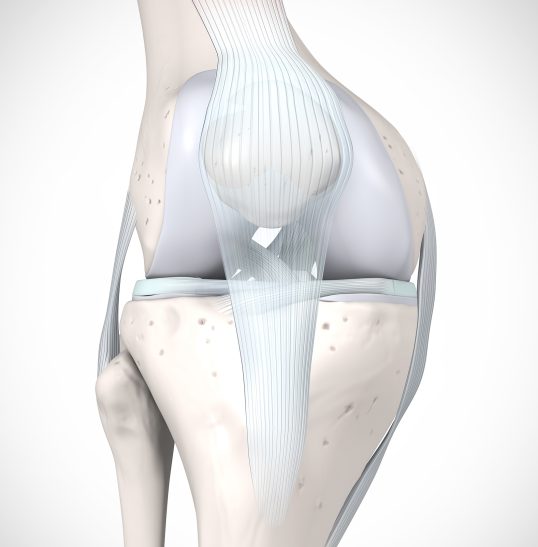
The cruciate ligaments play an essential role in the biomechanical function of the knee by limiting the movement of the shin relative to the thigh and thereby preventing excessive forward movement and rotation. A tear of the anterior cruciate ligament often occurs during highly dynamic movements and rapid changes of direction, as they occur in sports such as football, basketball and skiing. Typical symptoms of such a tear are a clearly audible popping sound at the moment of injury, immediate severe pain and rapidly developing swelling. An MRI is usually used for diagnosis in order to determine the extent of the injury. Effective treatment varies according to severity and can range from physiotherapy through to surgical procedures in which the torn cruciate ligament is replaced by a graft. Effective treatment planning is adapted individually in order to restore the stability and function of the knee as well as possible.
Answers solely from the contents of this website. Anonymous, no diagnosis.
Causes of an anterior cruciate ligament tear
Sports accidents are the most common cause of such a cruciate ligament tear in Düsseldorf. It can occur in isolation, but also as part of a general, extensive knee injury. Conversely, an isolated cruciate ligament tear can also partly affect surrounding tissue such as the collateral ligaments or the menisci.
With a cruciate ligament tear the patient feels a stabbing pain that shoots into the knee, and in most cases a distinct cracking sound can be heard.
Symptoms of a cruciate ligament rupture
Alongside initially severe pain, swelling and bruising occur. Joint locking and difficulty extending and bending the knee also tend to accompany them. This leads to a certain instability of the knee joint, which increases the danger of falling.
The stabbing pain subsides again after a short time and only returns under greater load. There are also cases, however, in which the pain becomes so slight over time that a cruciate ligament tear goes untreated for years. This can have long-term consequences for the knee, because it leads to degenerative changes and can thereby cause osteoarthritis and meniscus damage. It is therefore important that your orthopaedic specialist in Düsseldorf can recognise and treat a cruciate ligament tear at an early stage.
Treatment of an anterior cruciate ligament tear
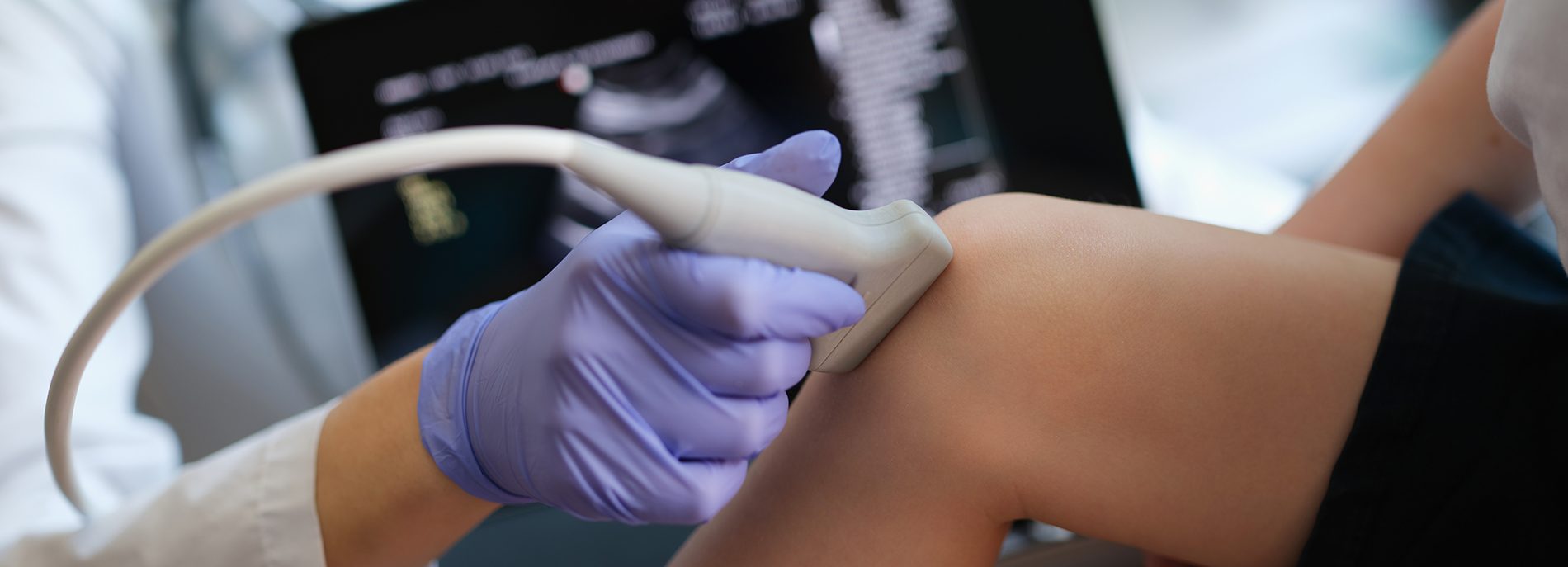
A clear diagnosis can be made in a clinical, manual examination and after an X-ray or MRI examination. Depending on the accompanying injuries, the age and the active lifestyle of the patient, a decision must be made as to whether conservative treatment is indicated or whether surgery is required.
Initial care involves immobilisation and cooling. Only once the acute phase is over can surgical treatment take place in suitable patients where instability persists.
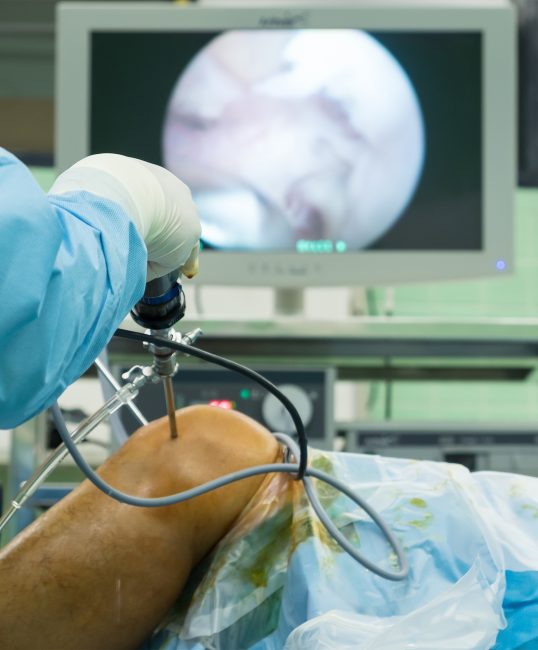
In such an operation a tendon from the back of the thigh or above the kneecap is used as a cruciate ligament replacement. This tissue material is both elastic and resistant to tearing. Because it is not an open but an arthroscopic operation, it places far less strain on the patient and their body and also takes aesthetics into account, since only small incisions have to be made. This additionally offers the advantage that, unlike with large wounds, bacteria and germs are given little surface to attack.
Recovery after a cruciate ligament tear
Depending on whether the patient is an athlete or a rather less active person, the healing phase differs. As a rule the patient can bear full weight after just 2 to 3 weeks. In principle, light sport can be started after 8 to 12 weeks. Contact sports should not be resumed before 6 months, however. This should in every case ideally be discussed individually with the doctor.
In any case a rehabilitation programme follows a cruciate ligament tear, in which strength and coordination exercises are carried out. Through the active cooperation of the patient, stabilisation of the knee joint can be achieved in this way.
At our practice we specialise professionally in this field and carry out both conservative and surgical treatment. If you have recently had an accident and a cruciate ligament tear is suspected, we will be glad to help you become free of symptoms as soon as possible with targeted and comprehensive treatment.
Benefit from modern treatment methods at our orthopaedic practice in Düsseldorf.
We specialise in the diagnosis and treatment of meniscus tears. Treatment of meniscus damage should always be carried out by an experienced specialist. At our practice we have extensive experience and are geared specifically towards the individual needs of patients with meniscus injuries in Düsseldorf.
Efficient and modern treatment methods for calcific shoulder tendinitis

Competent orthopaedic specialists in Düsseldorf – several practices and a high success rate
Frequently Asked Questions: Anterior Cruciate Ligament Tear
How long does an anterior cruciate ligament tear take to heal?
Healing of an anterior cruciate ligament tear can vary according to the treatment method and the individual healing rate. As a rule, full recovery takes about 6 to 9 months.
How is an anterior cruciate ligament tear treated?
Treatment can be conservative with physiotherapy or surgical by means of cruciate ligament reconstruction, depending on the severity of the injury and the physical activity demands of the patient.
Can you still walk with an anterior cruciate ligament tear?
Immediately after a cruciate ligament tear, walking is often painful and difficult. After a certain healing phase and with appropriate physiotherapy support, walking can become possible again.
What happens when the anterior cruciate ligament is torn?
A tear of the anterior cruciate ligament leads to instability in the knee, which increases the risk of further knee damage and impairs the function of the knee.
How long is immobilisation required after a cruciate ligament tear?
The duration of immobilisation varies, but typically the knee is fixed in a splint for a few weeks in order to support healing.
How quickly does a cruciate ligament tear need surgery?
A cruciate ligament tear does not need surgery immediately. It is often recommended to plan the operation once the initial swelling has subsided and the knee has regained a normal range of movement.
How long are you signed off sick with a cruciate ligament tear?
The length of the sick note depends on the type of treatment and on the occupation. As a rule, several weeks to months are possible.
Can you drive with a cruciate ligament tear?
Driving is usually not possible immediately after a cruciate ligament tear, particularly when the affected leg is the one used for the pedals. Once rehabilitation has begun and with medical approval, driving can become possible again.
Does health insurance cover treatment for an anterior cruciate ligament tear?
Diagnostics, MRI, physiotherapy, orthoses and cruciate ligament reconstruction are covered by statutory health insurance. In the case of a sports or work accident, accident insurance or the employers' liability insurance may be responsible. We clarify cover in Düsseldorf before the procedure.
How long does recovery take after cruciate ligament reconstruction?
The knee is fit for everyday life again after about six weeks, and cycling and swimming are possible early on. For sports involving rotation and contact, a break of about nine to twelve months is usual, as the graft first has to heal in.
Which exercises help after an anterior cruciate ligament tear?
Building up the thigh muscles, especially the posterior chain, together with balance and coordination training secures the knee. Controlled jump and landing training follows later. Rotational loads under weight belong late in the plan and only after clearance.
More treatments for Knee | Hip
Complaints rarely come alone. We also offer these treatments from the same area in Düsseldorf.