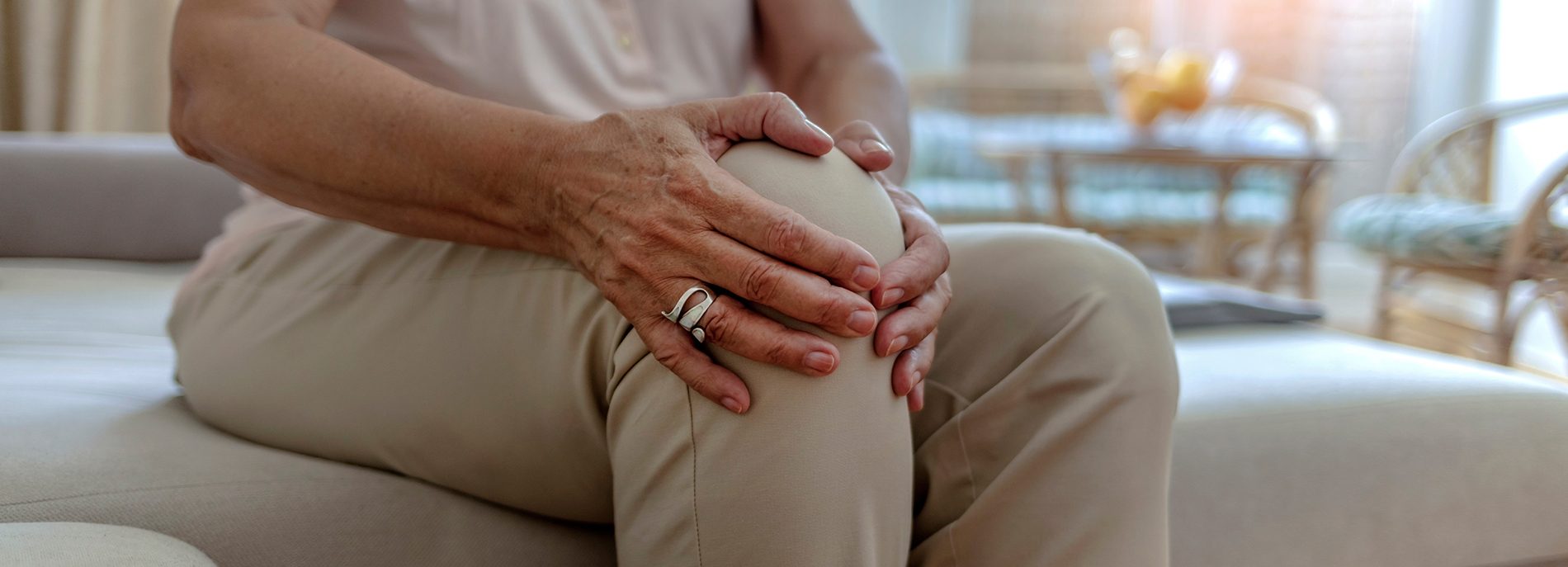
Treatment of knee osteoarthritis (gonarthrosis) at our orthopaedic practices in Düsseldorf
Osteoarthritis is always a sign of wear in joints. When the knee joints are affected by osteoarthritis, we speak of gonarthrosis, also known as knee osteoarthritis. In arthritic conditions it is above all the cartilage, which normally serves as a buffer against load, that is damaged. At an advanced stage cartilage material can detach and end up in the joint space or in the joint fluid. This can trigger inflammatory reactions and frequently leads to considerable knee pain as well as further restrictions of movement.
Knee osteoarthritis is the most common condition of the knee joint and occurs predominantly in later life. In men from about the age of 45 the frequency is initially higher than in women, while from about the age of 55 more women are affected overall. Alongside age, excess weight, misalignments (for example bow legs or knock knees), earlier injuries and occupational or sporting overload are among the most important risk factors.
Typical symptoms of knee osteoarthritis are load-dependent knee pain, start-up pain after periods of rest and increasing stiffness of the joint. As it progresses, swelling, grinding noises (crepitation) and restricted mobility can occur. Early diagnosis is decisive in slowing the progression of the condition. Conservative measures such as physiotherapy, weight reduction, anti-inflammatory medication or injections are available as treatment. At advanced stages a surgical procedure, such as a knee replacement, may also become necessary.
Answers solely from the contents of this website. Anonymous, no diagnosis.
Symptome einer Kniearthrose
Depending on how far it has progressed, gonarthrosis can cause very severe pain, which at times persists even at rest. The typical signs of gonarthrosis in Düsseldorf are:
- Pain when climbing stairs
- Pain under load (for example when carrying heavy loads)
- Pain after sitting for a long time
- Pain related to the weather (damp and cold weather)
- Pain when walking in general
- Grinding noises during movement
- Kniegelenkserguss
With advanced gonarthrosis the mobility of the knee can be so restricted that the knee eventually stiffens. In any case this condition means a considerable reduction in quality of life.
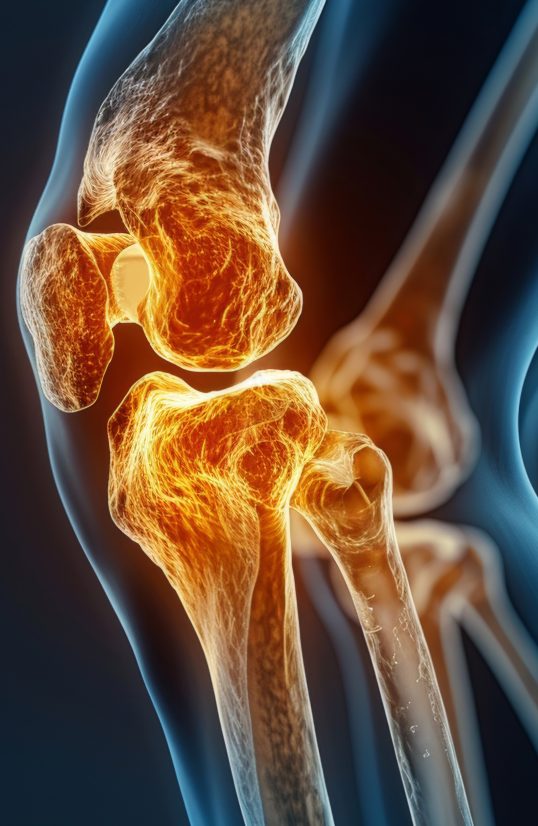
Ursachen einer Kniearthrose
In most cases knee osteoarthritis in Düsseldorf arises because of external influences. These may be past sports injuries of the knee joint, but also of the ankle. Years of poor posture then trigger the condition. A frequent cause is also sustained load through excessive sport or carrying heavy loads over a long period.
Not infrequently a profession that places heavy demands on the knees, such as that of a tiler, is responsible for gonarthrosis. Finally, substantial excess weight also plays a role in the development of the condition. In these cases we speak of secondary gonarthrosis.
It also happens, however, that gonarthrosis develops entirely without the known causes. In very rare cases younger people can also be affected. This circumstance has not yet been fully researched, but it seems likely that a genetic predisposition is the cause. The condition is then called primary gonarthrosis.
In any case it is important to carry out treatment at as early a stage as possible. Your orthopaedic specialist in Düsseldorf considers this very achievable today, and the prospects of successful treatment are very good.
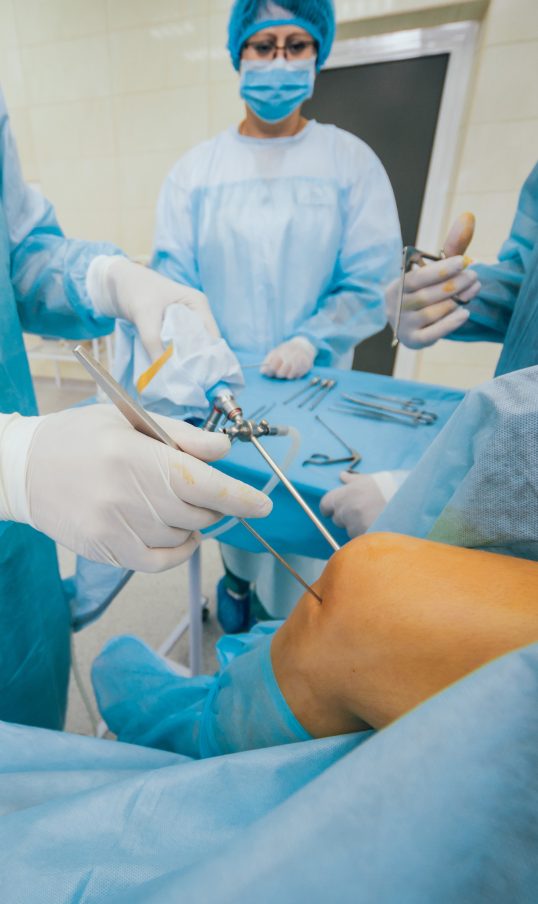
Treatment of knee osteoarthritis
Alongside a clinical examination in which mobility is checked, an X-ray must be taken. Only in this way can it be established how far the condition has progressed and whether cartilage loss is already such that the bones rub against each other unprotected.
At an early stage a conservative approach can be tried, with targeted physiotherapy exercises alongside the administration of pain-relieving and anti-inflammatory medication. It is important here that any weight reduction is achieved and that the knee joint is rested during this time. Orthopaedic aids that provide support for the knee joint can also be made.
When gonarthrosis has progressed, or when it is already present at several places inside the knee, surgery comes into consideration. Worn joint surfaces are then removed and replaced with a prosthesis. This can also be a partial prosthesis, and it is not always necessary to replace the entire knee joint with a prosthesis.
Sometimes, however, a minimally invasive step is enough, in which a joint endoscopy, known as arthroscopy, can establish the state of the cartilage and whether a joint effusion is present. This is removed by puncture and the pressure inside the knee joint falls. This produces a relieving and pain-reducing effect.
Osteoarthritis is not fully curable. In other words, wear of the joint can neither be reversed nor completely stopped. Through early detection and treatment, however, the course of the condition can be eased in most cases.
It is always of great importance to clarify complaints around the knee, because this joint is the main load bearer of the human skeleton. Do not put off an examination if you have knee complaints, because they will not disappear on their own. With our experience we can help you competently. Arrange an appointment online or call us during our consultation hours directly on the telephone number of the relevant practice. We will be glad to advise you about knee osteoarthritis in Düsseldorf.
Efficient and modern treatment methods for calcific shoulder tendinitis

Competent orthopaedic specialists in Düsseldorf – several practices and a high success rate
Frequently Asked Questions: Knee Osteoarthritis (Gonarthrosis)
What does knee osteoarthritis mean?
Knee osteoarthritis, also called gonarthrosis, describes wear of the knee joint, through which the layer of cartilage between the bones breaks down. This can lead to pain and restricted movement.
Is knee osteoarthritis curable?
Knee osteoarthritis is not curable, since cartilage that has broken down cannot regenerate. Treatment aims to relieve the symptoms and improve the function of the joint.
What does osteoarthritic pain in the knee feel like?
Osteoarthritic pain in the knee is often described as a persistent, aching pain that can intensify with movement. Stiffness and swelling frequently occur as well.
What should you avoid with knee osteoarthritis?
With knee osteoarthritis you should avoid overloading, for example standing for long periods, heavy lifting or high-intensity sporting activity that places heavy strain on the joint.
What makes knee osteoarthritis worse?
Excess weight, incorrect loading or an unbalanced diet can make knee osteoarthritis worse. A lack of movement or excessive use of the joint also contribute to worsening.
What happens with untreated knee osteoarthritis?
With untreated knee osteoarthritis the function of the joint can deteriorate progressively. This leads to stronger pain, increasing stiffness and possibly to permanent restriction of movement.
Which sport is good with osteoarthritis in the knee?
Joint-friendly sports such as swimming, cycling or aqua aerobics are recommended with knee osteoarthritis. They help maintain mobility and strengthen the muscles without loading the joint.
Does health insurance cover treatment for knee osteoarthritis?
Examination, X-ray, physiotherapy, braces, pain medication and the fitting of a knee prosthesis are covered by statutory health insurance. Hyaluronic acid injections for gonarthrosis are among the private services. We tell you the cost in Düsseldorf in advance.
How long does recovery take after a knee replacement?
First steps are usually possible the day after the operation. After six to eight weeks everyday life generally works well again, and you reach full load-bearing capacity after about three to six months. Consistent physiotherapy is decisive here.
Which exercises help with knee osteoarthritis?
Strengthening the thigh extensor, cycling with a high cadence and low resistance, and swimming relieve the joint and maintain mobility. Avoid deep squats, jumping and stop-and-go sports. A physiotherapist adapts the programme to your stage.
More treatments for Knee | Hip
Complaints rarely come alone. We also offer these treatments from the same area in Düsseldorf.