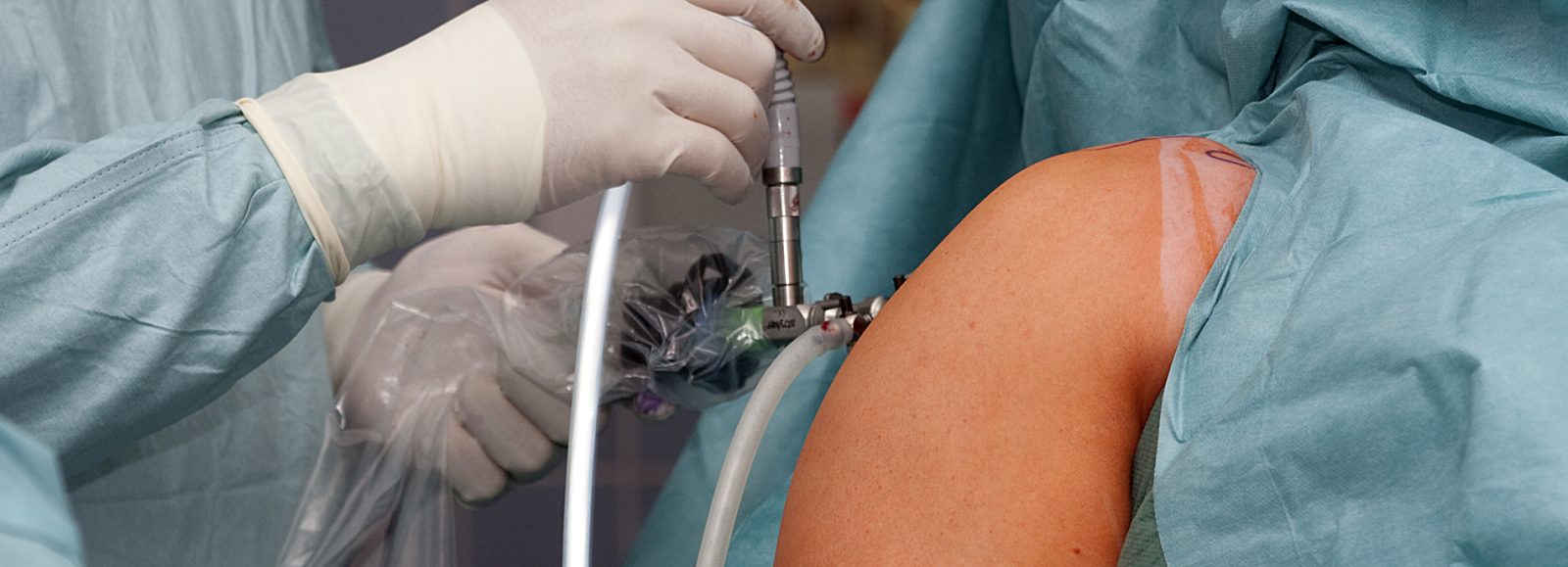
Shoulder Arthroscopy (Joint Endoscopy) for Shoulder Complaints in Düsseldorf
As experts in minimally invasive shoulder joint endoscopy at our orthopaedic practice in Düsseldorf, we offer you the most modern diagnostics and effective treatment for your shoulder complaints. Our specialists rely on advanced techniques and many years of experience in order to ensure optimal medical care of the highest standard.
Minimally invasive shoulder joint endoscopy is a special procedure in which we introduce a small device, known as an arthroscope, into the shoulder joint. This enables us to view the inside of your joint in detail and to carry out targeted treatment without having to make a large surgical incision.
Thanks to the latest technology and experienced specialists, this procedure is less invasive and less painful than traditional methods, which leads to a considerably shortened recovery time. It can also frequently reduce the need for further invasive procedures.
Answers solely from the contents of this website. Anonymous, no diagnosis.
What is an arthroscopy of the shoulder / shoulder surgery?
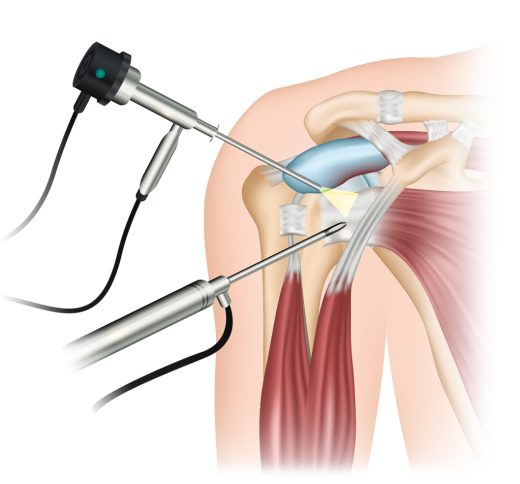
Shoulder joint endoscopy, also called shoulder arthroscopy or keyhole surgery of the shoulder, is a minimally invasive surgical method and has become indispensable in modern surgery. The term derives from the Greek words arthros, meaning joint, and skopein, meaning to look inside.
During a shoulder endoscopy the various structures of the shoulder joint such as muscles, ligaments and cartilage are examined with the help of an arthroscope, which is a thin tube with a video camera at its end.
Shoulder arthroscopy / shoulder endoscopy: treatment of injuries and signs of wear
Minimally invasive shoulder joint endoscopy is used to treat both injury-related complaints and signs of wear of the joint in various problems or conditions. Some examples are listed below.
Relief of calcific shoulder tendinitis through arthroscopy
Our orthopaedic practices in Düsseldorf are among the leading addresses for treating a treatment-resistant impingement syndrome, also known as shoulder impingement. Through the use of the most modern shoulder arthroscopy procedures we enable effective and minimally invasive treatment of this complex condition by widening the space beneath the shoulder roof and removing inflamed tissue.
Treatment for rotator cuff tears with shoulder arthroscopy
We are particularly qualified in Düsseldorf for partial or complete tears of the tendon portions of the rotator cuff. Our orthopaedic practices are excellently equipped to assess the extent of the damage by shoulder arthroscopy and then carry out suitable treatment.
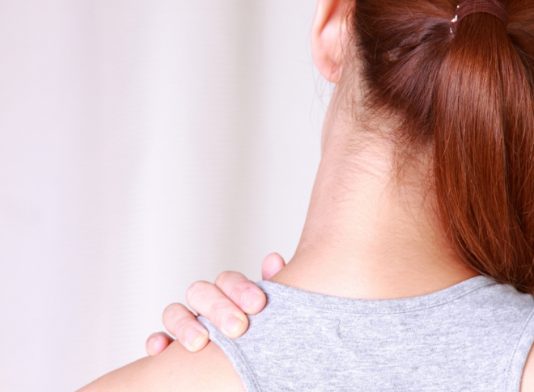
Effective arthroscopic treatment of impingement syndrome
In advanced cases of impingement syndrome, or with bony changes, surgery may be required. This is carried out minimally invasively by arthroscopy through a few small incisions. Inflamed tissue is removed and bony structures are smoothed in order to widen the joint space. After a few weeks the tissue regenerates and the pain subsides. The procedure is low in risk, successful and mostly carried out as day surgery. Early physiotherapy supports healing and the restoration of mobility.
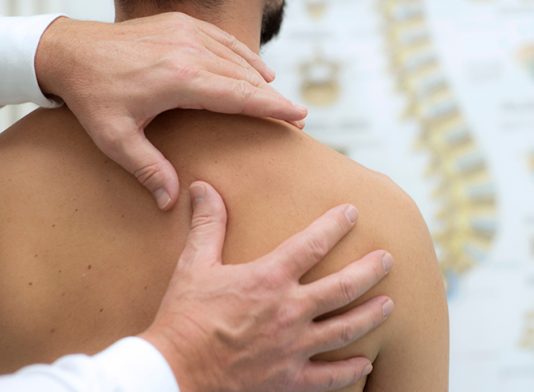
Treatment of shoulder instability after dislocation
Shoulder instability after a dislocation of the shoulder is a further challenge that we address routinely. With the help of shoulder arthroscopy we can diagnose and correct the instability, so that patients can resume their everyday activities free of pain and with full mobility.
How a shoulder arthroscopy works
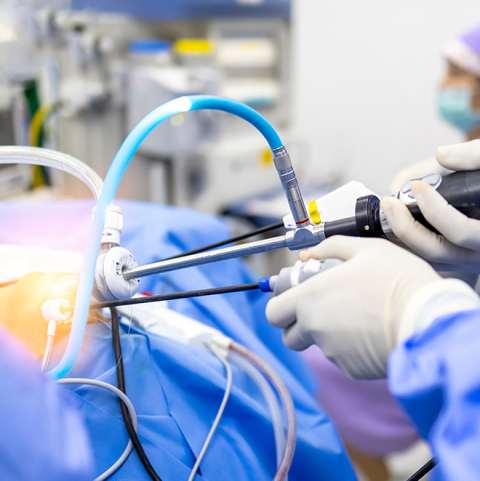
As a rule a few small incisions are needed for the operation, through which we introduce the arthroscope or the working instruments into the joint. After filling the joint with an irrigation solution and introducing the camera, we can see and assess precisely all the important structures (tendons, ligaments, bursa, cartilage and so on) on a monitor. In the same session, special instruments can be introduced into the joint depending on the findings, in order to treat damage and injuries of the shoulder directly.
The advantages of shoulder joint endoscopy
The positive arguments in favour of a shoulder arthroscopy in Düsseldorf are many. As experienced orthopaedic specialists we can see damage to the shoulder joint in detail with the help of the mini camera, assess it precisely and treat it optimally straight away. A further advantage of the minimally invasive method is that the small incisions allow us to treat you with considerably less soft tissue damage inside the joint. The risk of wound infection is also reduced.
The majority of arthroscopic procedures on the shoulder joint can be carried out as day surgery; a hospital stay is mostly not necessary and you can return quickly to your familiar surroundings. A short operating time reduces the time under anaesthetic. After the operation, experience shows that the minimally invasive and low-risk procedure causes less pain. We determine the post-operative treatment plan together with you in order to achieve a rapid return to everyday and sporting use of the joint.
When does a shoulder arthroscopy become necessary?
The need for an arthroscopy of the shoulder is a very individual and patient-related decision. It serves above all to clarify complaints of the shoulder joint, to provide reliable diagnosis and to treat changes or injuries of the joint. The most common reasons for carrying out a shoulder arthroscopy include:
- Degenerative changes of the joint
- Inflammatory changes
- Trauma, that is injuries or changes resulting from accidents
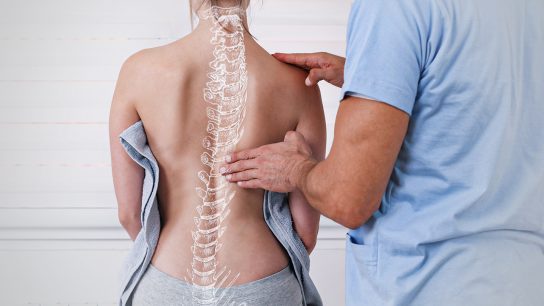
Efficient and modern treatment methods for calcific shoulder tendinitis
Frequently Asked Questions: Shoulder Arthroscopy
How long does healing take after an arthroscopy of the shoulder?
The healing time after an arthroscopy of the shoulder can vary from patient to patient and depends on various factors. In general it can take several weeks to months until the shoulder has healed completely after the procedure. Directly after the operation, swelling, pain and restricted movement can occur, which should subside over time. Early physiotherapy is normally recommended in order to restore the mobility of the shoulder and strengthen the muscles. The recovery process can also depend on the type and extent of the procedure. It is important to follow the instructions of the treating doctor, to attend regular follow-up examinations and to carry out the rehabilitation plan consistently in order to enable an optimal recovery.
How painful is a shoulder arthroscopy?
A shoulder arthroscopy generally involves a certain amount of pain, which in most cases can be controlled well. The procedure is carried out under general anaesthetic or local anaesthetic in order to keep the patient free of pain during the procedure. After the operation, pain can occur that is caused by the small incisions and the introduction of instruments into the shoulder. The intensity of the pain can vary from person to person and also depends on individual pain tolerance. In the first days after the procedure, painkillers can be prescribed in order to relieve the discomfort. Using ice packs and elevating the shoulder can also contribute to pain relief. The pain normally subsides over time and can be minimised with appropriate pain control and rehabilitation. It is important to discuss any pain with the treating doctor in order to take suitable measures for pain control.
What is done during a shoulder arthroscopy?
A shoulder arthroscopy is a minimally invasive surgical procedure in which an arthroscope is used to examine the inside of the shoulder joint and carry out certain treatments. Tiny instruments and a camera are introduced into the shoulder joint through small incisions. The camera delivers images of the joint to a monitor, which gives the surgeon a precise view of the structures. During the procedure various steps can be carried out, such as the removal of inflamed tissue or calcium deposits, the repair of tendons or cartilage, the treatment of narrow areas or the relief of constrictions in the shoulder joint. The precise approach depends on the individual diagnosis and the specific problems of the patient. The advantage of a shoulder arthroscopy is that it is less invasive than open surgical procedures, which leads to faster recovery, less post-operative pain and smaller scars.
When may you drive after a shoulder arthroscopy?
The decision to drive again after a shoulder arthroscopy should be taken individually and depends on various factors. As a rule it is recommended not to drive yourself for a certain time after the procedure. This is because the shoulder can still be weakened after the operation and mobility can be restricted. In addition, pain, tiredness or taking painkillers can impair fitness to drive. It is important to follow the instructions of the treating doctor and to await their approval before taking part actively in road traffic again. In some cases it may be necessary to refrain from driving for a certain time and to rely on other means of transport in order to ensure the safety of both the patient and other road users. It is advisable to consult the treating doctor before resuming driving in order to receive individual recommendations.
What should you avoid after shoulder surgery?
After shoulder surgery there are some activities that should be avoided in order to promote recovery and prevent possible complications. This generally includes lifting heavy objects or placing excessive load on the operated shoulder. It is important to follow the instructions of the treating doctor in order to ensure the correct behaviour after the operation. In the first weeks after the operation you should avoid raising the arms above shoulder height or making abrupt movements with the operated shoulder. Sports or activities that carry a high risk of falls, collisions or sudden movements of the shoulder should equally be avoided. Wearing a sling or support can also be recommended in order to stabilise and protect the shoulder. It is important to allow yourself sufficient rest and recovery during the healing period and to begin gradually with physiotherapy and targeted exercises to strengthen the muscles. Individual instructions and restrictions can vary according to the type and extent of the operation, so it is important to speak with the treating doctor and obtain specific instructions.
How do you sleep after a shoulder arthroscopy?
After a shoulder arthroscopy, sleeping can be somewhat challenging, as the shoulder can be weakened and sensitive. There are some ways to improve sleeping comfort, however. A frequently recommended sleeping position is on the back, as this reduces the pressure on the operated shoulder. It can be helpful to use a special shoulder pillow or a neck support pillow in order to relieve the shoulder and support the correct alignment of the spine. The pillow should be positioned so that it supports the arm and the shoulder well, in order to minimise movement and unnecessary strain. It can also be worthwhile to place additional pillows around the body in order to improve positioning and stability during sleep. It is important to pay attention to the individual needs of the body and to adapt the sleeping position in order to avoid pain and create a comfortable sleeping environment. It can also be advisable to take painkillers before going to bed, if this has been recommended by the doctor, in order to minimise any discomfort. Speak with your treating doctor about specific recommendations and tips tailored to your individual situation.
When should you have an arthroscopy?
The decision to carry out an arthroscopy depends on several factors and should be taken individually. Arthroscopic procedures are generally considered when conservative treatments such as medication, physiotherapy or injections do not offer sufficient relief of the symptoms. The indication for arthroscopy can depend on various factors, such as the extent of the pain, the functional impairment, the severity of the injury or the type of condition in the joint. In some cases diagnostic arthroscopies can be carried out in order to determine the precise cause of complaints or damage in the joint. It is important that the treating doctor assesses the individual situation of the patient and weighs up the advantages and disadvantages of an arthroscopy together with the patient. It can also be worthwhile to obtain a second opinion in order to examine various treatment options and reach a well-founded decision. The final decision to carry out an arthroscopy should be based on a thorough examination, diagnosis and joint discussion between patient and doctor.
Can you go to rehabilitation after shoulder surgery?
Yes, after shoulder surgery it is often advisable to consider a rehabilitation phase in the form of physiotherapy or a special rehabilitation programme, such as inpatient or outpatient rehabilitation. Rehabilitation aims to restore the mobility, strength and stability of the shoulder, relieve pain and improve the functional mobility of the arm. Physiotherapy can include exercises to strengthen the muscles, passive and active movement therapy, stretching exercises and specific techniques for restoring shoulder function. A rehabilitation programme can be supervised by an interdisciplinary team of doctors, physiotherapists and occupational therapists who develop individually adapted programmes in order to ensure an optimal recovery. The duration and intensity of the rehabilitation depend on the type of procedure, the condition of the shoulder before the operation and the individual course of recovery. Early rehabilitation can help minimise complications, restore the function of the shoulder and make the return to everyday activities easier. It is important to follow the instructions of the treating doctor and to carry out the rehabilitation plan consistently in order to achieve the best possible results.
How many incisions are made during a shoulder arthroscopy?
During a shoulder arthroscopy several small incisions are generally made. The exact number of incisions can vary, depending on the specific type of procedure and the problems to be treated. Typically, however, about two to four incisions are used. These are normally only a few millimetres long. Through these small incisions the arthroscope, other surgical instruments and possibly additional instruments are introduced in order to inspect the joint, remove tissue or carry out repairs. The advantage of the arthroscopic method is that it is less invasive than open surgical procedures, which leads to smaller scars, less post-operative pain and a faster recovery. The precise placement of the incisions is determined according to the individual requirements of the patient and the specific goals of the procedure. The treating surgeon will determine the best approach for each case.
How long is physiotherapy needed after shoulder surgery?
The duration of physiotherapy after shoulder surgery can vary according to the type of procedure, the individual course of recovery and the goals of rehabilitation. As a rule, continuous physiotherapy is recommended for several weeks to months after the operation. The goal of physiotherapy is to restore the mobility, strength and stability of the shoulder, relieve pain and improve the functional mobility of the arm. During physiotherapy, individually adapted exercises and techniques are used in order to strengthen the muscles, improve mobility and stabilise the shoulder joint. The exact duration of physiotherapy depends on various factors, such as the extent of the injury or the procedure, the individual course of healing, the compliance of the patient and the progress made during rehabilitation. It is important to follow the instructions of the treating doctor and the physiotherapist in order to achieve the best possible result. Even after physiotherapy has ended, it can be worthwhile to carry out exercises independently to maintain shoulder health and to keep an active lifestyle.
Does health insurance cover a shoulder arthroscopy?
Yes. If the joint endoscopy is medically necessary for clarification or treatment, statutory health insurance covers the procedure, the anaesthetic and the subsequent physiotherapy. We inform you about optional services and possible additional costs in Düsseldorf before the appointment.
Which exercises are useful after a shoulder arthroscopy?
In the first days pendulum exercises and guided movements come first, followed by gradual strengthening of the rotator cuff. Overhead movements with weight are added only once your doctor has cleared them. We agree the build-up together with you and your physiotherapist.
More treatments for Shoulder | Arm | Hand
Complaints rarely come alone. We also offer these treatments from the same area in Düsseldorf.