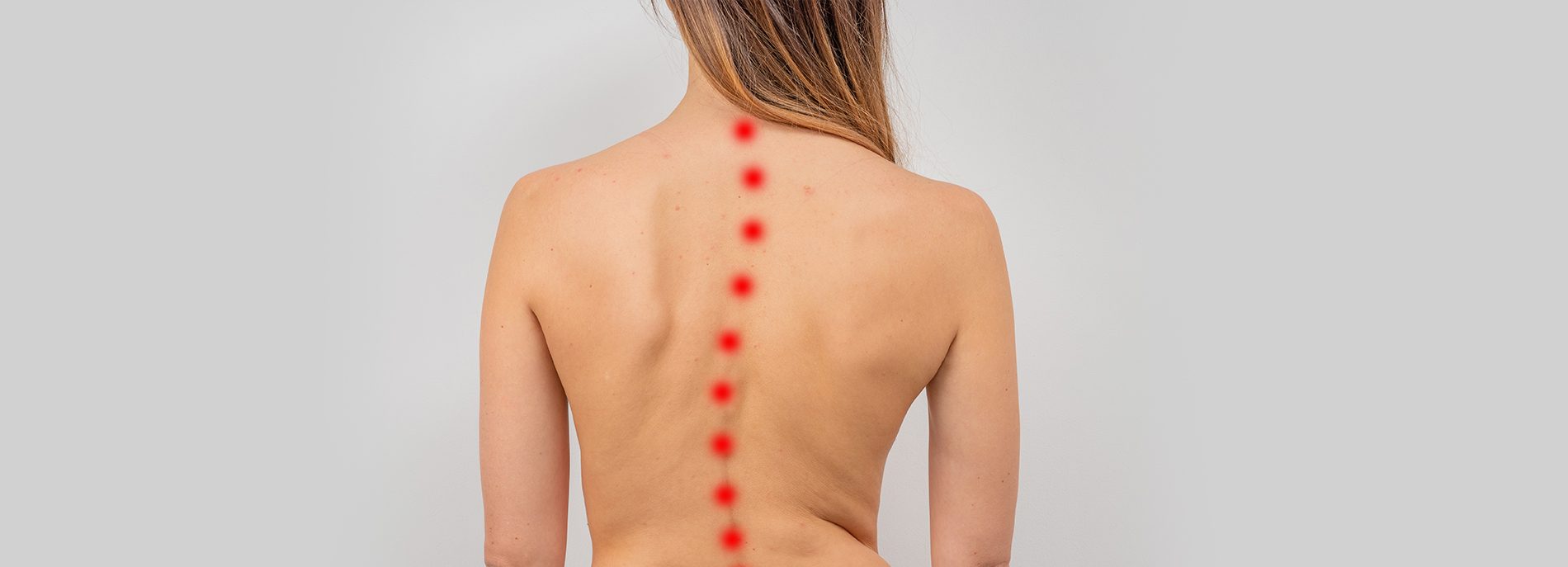
Treatment of scoliosis (curvature of the spine) in Düsseldorf
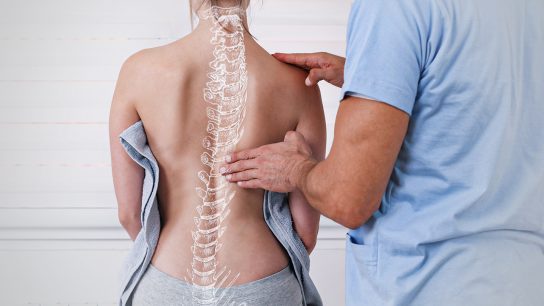
Scoliosis (derived from the Greek word scolios, meaning crooked) is a misalignment of the spine. Alongside a sideways curvature, the spine also shows a twisting of the individual vertebral bodies and of the corresponding discs, ligaments and joints.
In most cases scoliosis is a growth deformity, which means it is a condition of the spine that arises during a person's growth, that is in childhood and adolescence.
Treatment of scoliosis (curvature of the spine) depends on the severity of the curvature, the age of the person affected and the progression of the condition. Mild forms are frequently treated conservatively, particularly through physiotherapy exercises to strengthen the back muscles and improve posture. With progressive or more pronounced curvature, wearing a brace (orthosis) may be required in order to slow or prevent progression. In severe cases, particularly when the function of internal organs is impaired or severe complaints exist, a surgical procedure may become necessary. The goal of all treatment measures is to stabilise the spine as far as possible, relieve complaints and preserve or improve the quality of life of those affected.
Answers solely from the contents of this website. Anonymous, no diagnosis.
Ursachen einer Skoliose
In about 80 to 90 per cent of scoliosis cases the causes of the curvature of the spine are unknown. This form of the condition is called idiopathic scoliosis. There are many theories about the development of idiopathic scoliosis, which are discussed controversially. The genetic component plays a large role here, however.
Alongside idiopathic scoliosis, this condition of the spine can be divided into further forms according to its causes. These include neuromuscular scoliosis, which is caused by neurological conditions such as cerebral palsy, congenital scoliosis, which describes a congenital malformation of the spine, and syndromic scoliosis, which goes back to genetic or chromosomal abnormalities.
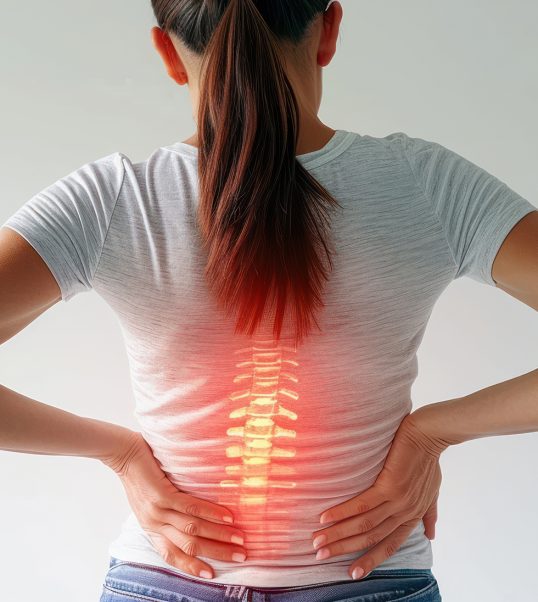
Symptoms and complaints with scoliosis
Many of those affected have mild scoliosis, which generally causes no complaints at all and which your orthopaedic specialist in Düsseldorf can therefore treat conservatively with physiotherapy.
If scoliosis progresses continuously, however, a series of complaints and signs can occur:
- Uneven shoulder height
- Schiefe Taille
- Tilted head posture
- Back pain
- Deformity of the rib cage
- Degenerative changes of the affected sections of the spine
If severe scoliosis leads to deformation of the rib cage, the heart and lungs can be constricted. At that point at the latest, surgical treatment is unavoidable.
Treatment of curvature of the spine (scoliosis treatment)
The treatment options for scoliosis in Düsseldorf depend substantially on the degree the curvature of the spine has already reached. The age and general state of health of the patient also play a role in choosing the right treatment.
As a basic principle: the later scoliosis begins and the earlier treatment starts, the more effectively its effects can be counteracted. Early detection of a condition or curvature of the spine through regular check-ups is therefore particularly important, so that suitable measures can be taken as quickly and as early as possible.
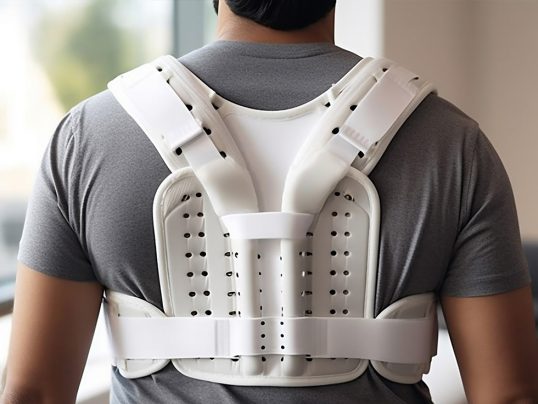
Konservative Therapie (Korsett gegen Skoliose)
Conservative therapy is generally an option for mild curvatures of the spine (25 to 40 degrees) in patients who are still growing. Wearing a brace prevents the progression of the curvature during growth and stabilises the spine.
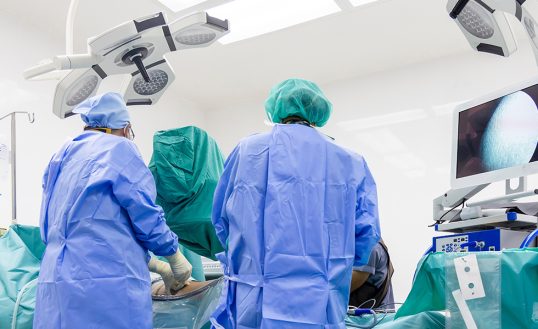
Surgery for scoliosis
If the progression of the spine cannot be stopped by wearing a brace, or if the scoliosis has already exceeded a certain degree of curvature that severely impairs the patient's quality of life, surgical treatment should not be delayed for too long.
With surgical treatment there are two options: depending on the extent of the curvature, access to the spine can be from the front (ventral) or from the back (dorsal). The goal of a surgical procedure is to stop the progression of the curvature of the spine and to straighten the spine.
Efficient and modern treatment methods for calcific shoulder tendinitis
Competent orthopaedic specialists in Düsseldorf – several practices and a high success rate
Frequently Asked Questions: Scoliosis
What can be done about curvature of the spine?
A wide range of measures is possible for treating a curvature of the spine, depending on the type and severity of the curvature. These include physiotherapy exercises to strengthen the back muscles, specific stretching exercises, wearing an orthopaedic brace and, in more severe cases, surgical procedures. Early diagnosis and treatment are decisive in preventing progression of the curvature and relieving complaints.
Which therapy helps with scoliosis?
Various therapeutic approaches can help with scoliosis. Physiotherapy is a common treatment method in which targeted exercises strengthen the muscles and improve mobility. Wearing a scoliosis brace can prevent progression of the curvature in adolescents. In advanced cases surgical correction may be necessary in order to straighten the spine and improve quality of life.
Can a crooked spine be made straight again?
In many cases a crooked spine can be corrected partly or completely, particularly with early diagnosis and treatment. Physiotherapy and wearing a brace can reduce or stabilise the curvature. With severe scoliosis a surgical procedure may be required in order to straighten the spine and improve function.
What happens if scoliosis is not treated?
Untreated scoliosis can lead to considerable health problems over time. These include chronic back pain, restricted lung function, heart problems because of the displacement of organs, and a visible physical deformity. Quality of life can be considerably impaired as a result. Early diagnosis and treatment are therefore decisive in avoiding these complications.
Is it ever too late to correct scoliosis?
It is rarely too late to treat scoliosis. In adulthood too, therapeutic measures such as physiotherapy, pain management and, where appropriate, surgical procedures can contribute to improving symptoms and quality of life. While correction of the curvature is often more effective in children and adolescents, adults can also benefit from treatment.
What should you avoid with scoliosis?
With scoliosis, activities that place excessive strain on the spine or twist it should be avoided. These include heavy lifting, intensive back sports without guidance and sitting or standing for long periods in an unfavourable posture. It is important to pay attention to correct posture and to encourage back-friendly patterns of movement in order to relieve the spine.
What can you not do with scoliosis?
People with scoliosis should avoid extreme physical loads and sports that require a high degree of spinal rotation or impact. These include activities such as weightlifting, gymnastics and certain martial arts. Instead they should concentrate on exercises that stabilise the spine and strengthen the muscles without overloading them.
What kind of pain occurs with scoliosis?
The pain with scoliosis varies according to the severity of the curvature and the parts of the body affected. Typically back pain occurs, caused by muscle tension, trapped nerves or uneven loading of the spine. In severe cases pain can also occur in the legs, hips or neck, depending on which areas of the back are affected.
How is it best to sleep with scoliosis?
In order to sleep well with scoliosis it is important to find a position that supports the spine optimally. A side sleeping position with the knees slightly drawn up can help relieve the spine. An ergonomic pillow that supports the neck and a mattress that is neither too hard nor too soft are also recommended. It can also help to place a small pillow between the knees in order to encourage the natural alignment of the spine.
Does health insurance cover treatment for scoliosis?
Examination, X-ray, Schroth physiotherapy and a prescribed brace are covered by statutory health insurance where indicated. Surgical correction is also covered in cases of severe curvature of the spine. We clarify your entitlement in Düsseldorf in advance.
How long does scoliosis treatment take?
In children and adolescents, treatment accompanies the whole of growth and a brace is often worn for several years. In adults the focus is on pain relief and stabilisation, so therapy continues permanently. Checks take place at fixed intervals.
Which exercises help with scoliosis?
Three-dimensional Schroth scoliosis therapy with breathing guidance, strengthening of the concave side and posture correction is the established approach. Swimming and trunk stabilisation are useful additions. The exercises must match your curvature pattern and belong in trained hands.
More treatments for Spine Surgery
Complaints rarely come alone. We also offer these treatments from the same area in Düsseldorf.