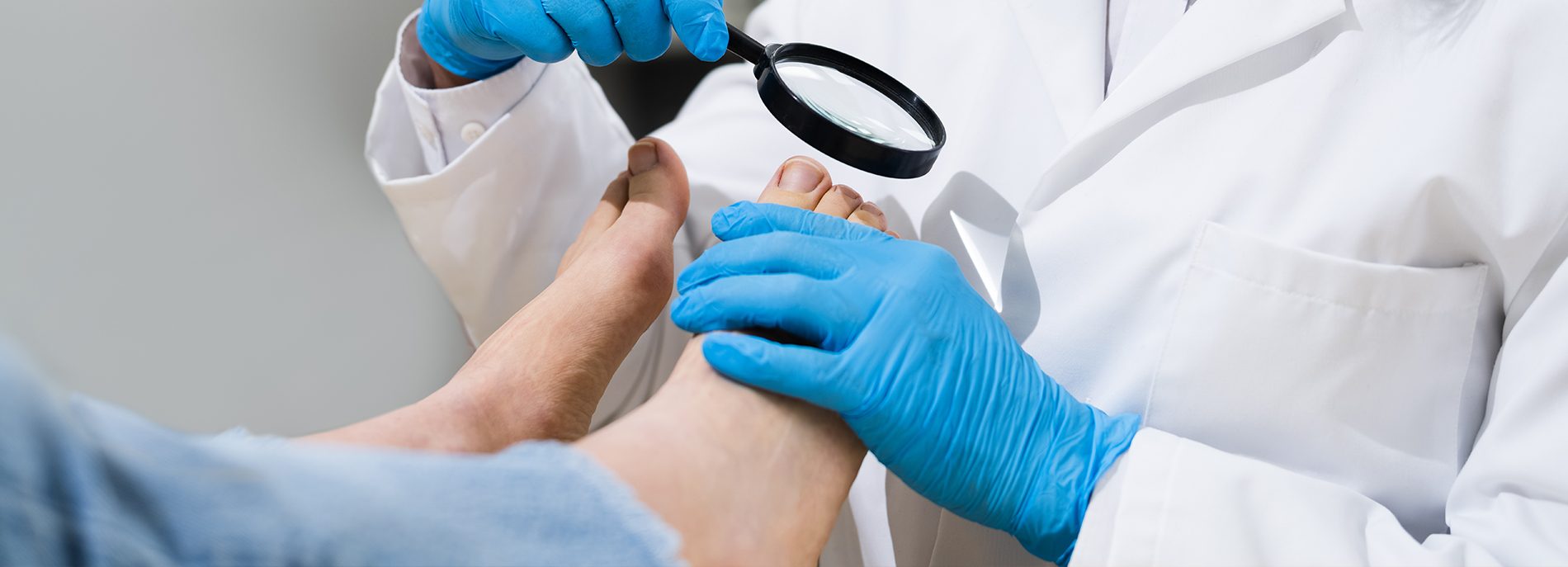
Treatment of ingrown toenails (unguis incarnatus) in Düsseldorf
Walking and running without discomfort is one of the basic requirements for our wellbeing. Alongside numerous conditions that impair this wellbeing specifically in the lower limbs, there is also the problem of ingrown toenails (unguis incarnatus). In most cases the big toe is affected.
Such a condition can be caused primarily by cutting the nails incorrectly, shoes that are too tight or excessive pressure on the foot. Typically the side edge of the nail penetrates the surrounding tissue, which leads to redness, pain and swelling. In some cases an infection can even develop, which shows itself through the formation of pus. It is therefore extremely important to pay attention to proper foot care and to consult a specialist immediately at the first signs of an ingrown toenail (unguis incarnatus).
Answers solely from the contents of this website. Anonymous, no diagnosis.
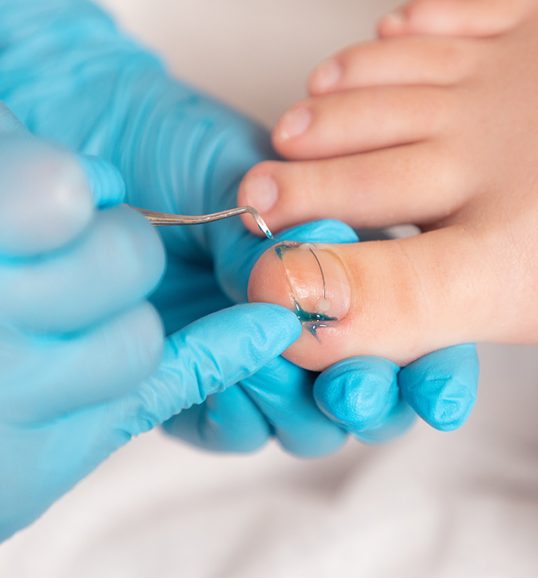
Causes of ingrown nails
Wearing shoes that are too tight or too pointed over a long period can cause the nail to change its direction of growth. It then presses into the nail bed and causes pain or inflammation. Cutting the nails incorrectly or using unsuitable tools can equally contribute to the problem. Patients who suffer severe pain tend to shorten their nails, often in an oval shape, which accelerates the deviant growth. Heavy sweating additionally encourages the situation by softening the skin around the nail.
Over time the skin reacts with irritation, which makes it susceptible to bacteria and causes further inflammation. A wide nail bed is likewise predisposed to ingrown nails. These factors create a vicious circle from which patients are often unable to free themselves alone. In such cases it is advisable to seek the help of an orthopaedic specialist.
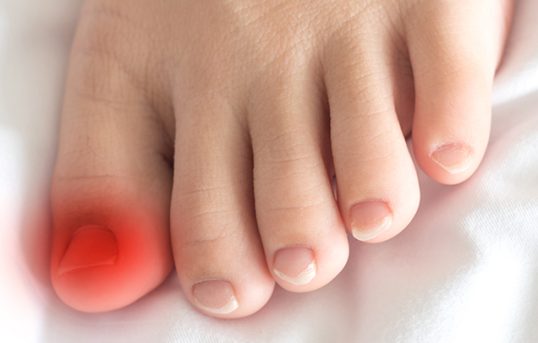
Symptoms of an ingrown toenail
Because of the irritated tissue, even light pressure can at times cause great pain. This can go so far that a gentle touch is already painful. The edges of the nail are usually red because of inflammation and feel warm. Sometimes a local throbbing is also felt. Even wearing socks can be unbearable, let alone shoes.
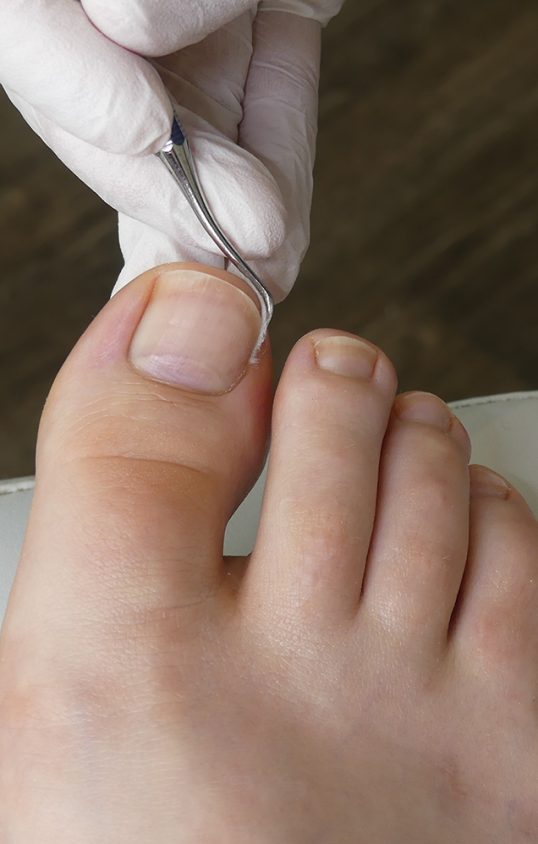
The treatment of an ingrown toenail
Conservative treatment should always be tried first. Foot baths relax and soften the skin surrounding the nail so that anti-inflammatory iodine ointments can be applied effectively. The toe is then fitted with a pressure-relieving dressing.
If conservative treatment does not lead to the desired result, or if the nail has already grown in too deeply, a surgical procedure becomes necessary. The ingrown corners of the nail and the surrounding granulation tissue then have to be removed under local anaesthetic.
A reduction of the nail bed can also be carried out, in which the nail fold and the relevant part of the nail are removed in a wedge shape. This makes the nail narrower overall and reduces the risk of it growing in again.
Overall it can be said that the results of treatment by an experienced specialist are very good. In any case, however, patience is also required on the part of the patient, together with strict attention to suitable footwear and good care of the feet, because otherwise an ingrown nail keeps coming back.
If you have further questions about ingrown nails in Düsseldorf, please contact us and arrange an appointment online, or call us during our consultation hours directly on the telephone number of the relevant practice. We can help you and look forward to seeing you.
Efficient and modern treatment methods for calcific shoulder tendinitis

Competent orthopaedic specialists in Düsseldorf – several practices and a high success rate
Frequently Asked Questions: Ingrown Toenail
How do you get rid of an ingrown nail?
An ingrown nail is treated according to its severity, first conservatively and later, if necessary, surgically. At the outset, measures such as soaking, correct care and pressure relief help. If that is not enough or inflammation occurs, a doctor treats the nail specifically or removes part of it if required.
Is an ingrown toenail an emergency?
Not necessarily an emergency, but it can be very painful and, if left untreated, lead to an infection. If the area is very swollen, red, excessively painful or shows signs of infection (such as pus), seek medical help.
When does an ingrown toenail need surgery?
Surgery is often necessary when non-surgical measures such as soaking the toe and using special nail clippers bring no relief, or when repeated infections occur.
How long should you avoid running after toenail surgery?
Depending on the type of procedure and the course of healing, you should refrain from intensive running or sport for about 1 to 2 weeks after the operation. Light movement such as normal walking is often possible just a few days after the operation. Follow the instructions of your doctor.
How long should you avoid showering after toenail surgery?
As a rule the surgical area should be kept dry for at least 24 to 48 hours. The exact duration can vary, however, according to the type of procedure and the specific instructions of your doctor.
Which shoes after toenail surgery?
After the operation it is best to wear wide, comfortable shoes or special post-operative shoes that protect the toe from pressure and support healing.
When do you get a post-operative shoe?
A post-operative shoe is usually provided after the operation in order to protect the treated area from further injury and to ensure a suitable healing environment.
Does health insurance cover treatment for an ingrown toenail?
Yes. Examination, dressing changes and the surgical procedure including reduction of the nail bed are covered by statutory health insurance where medically necessary. Purely cosmetic requests and additional podiatry services are billed privately, and we tell you the cost in Düsseldorf in advance.
How long does healing take after the operation?
The wound has usually healed after two to three weeks. You normally wear a post-operative shoe for a few days, after which normal footwear becomes possible again step by step. It takes several months for the nail to grow back completely.
What can I do myself about an ingrown toenail?
Cut the nail straight rather than round, wear shoes with enough room and keep your feet dry and well cared for. Warm foot baths soften the skin and relieve pressure. With redness, swelling or pus you should not continue treating it yourself but come to the practice promptly.
More treatments for Foot | Ankle
Complaints rarely come alone. We also offer these treatments from the same area in Düsseldorf.