
Treating Osteoporotic Vertebral Fractures in Düsseldorf
Osteoporosis is a condition of the skeletal system and leads to progressive loss of bone. While bone density reaches its maximum at around the age of 30, it decreases continuously after that. Bone mass continues to be formed, but not to a sufficient degree to compensate for the loss. As a result the bones lose stability and the risk of fractures rises. A typical injury in later life is a fractured neck of femur.
The vertebral bodies can also be affected. Through loss of bone they lose stability and can break under even slight load. These so-called osteoporotic vertebral fractures occur above all in older people, particularly in women. They often cause severe pain and considerably restrict mobility, which in turn can encourage secondary conditions such as thrombosis or pneumonia.
If several vertebrae are affected, a rounded back (kyphosis) can develop, which causes additional complaints.
The treatment of osteoporotic vertebral fractures depends on the severity. In many cases conservative therapy is sufficient, with painkillers, rest, physiotherapy and targeted osteoporosis treatment (for example calcium, vitamin D and specific medication). With persistent pain, minimally invasive procedures such as vertebroplasty or kyphoplasty can be used in order to stabilise the vertebra. Early treatment is important in order to relieve pain, preserve mobility and avoid complications.
Answers solely from the contents of this website. Anonymous, no diagnosis.
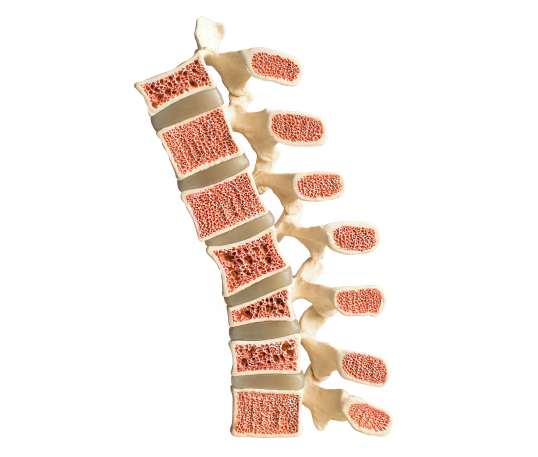
The treatment of osteoporotic vertebral fractures
As always, your orthopaedic specialist in Düsseldorf will first try to carry out treatment conservatively. This of course depends on the stage of the condition. In order to relieve the pain, treatment with painkillers is used to dampen it. At the same time a gentle attempt is made to restore mobility with physiotherapy. A treatment period of three to four months should be expected.
Vertebroplastie & Kyphoplastie
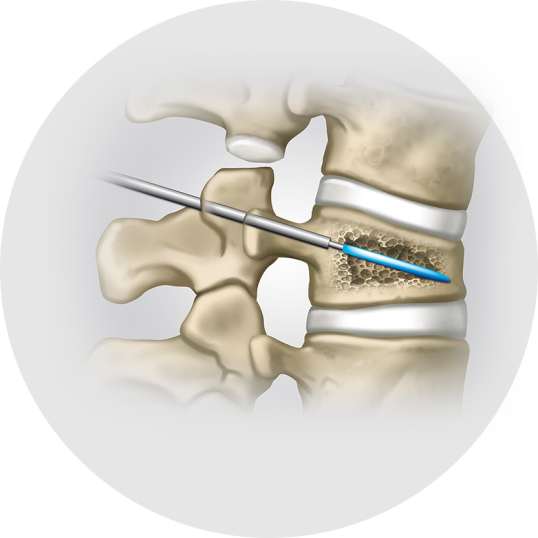
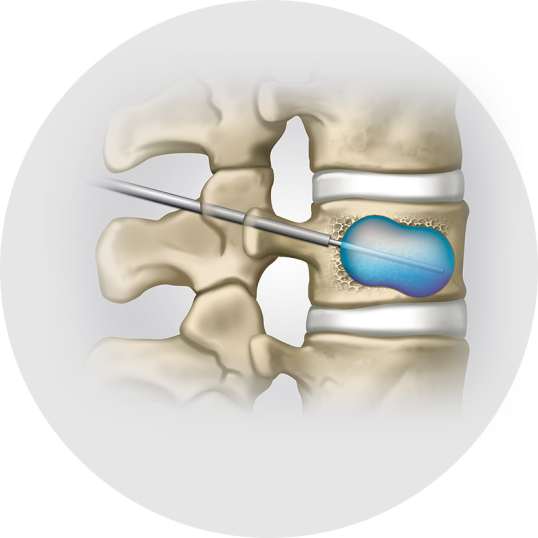
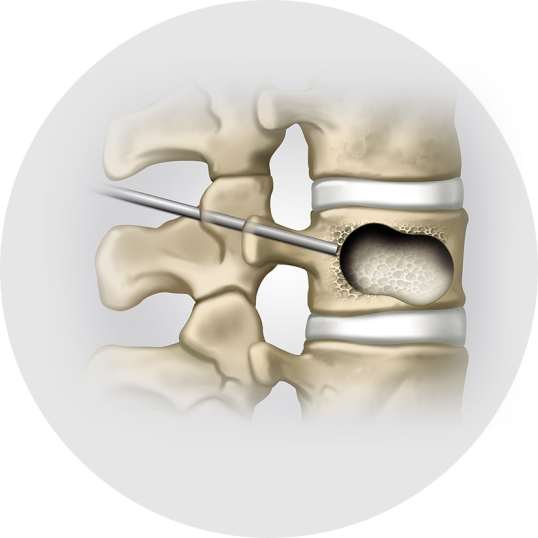
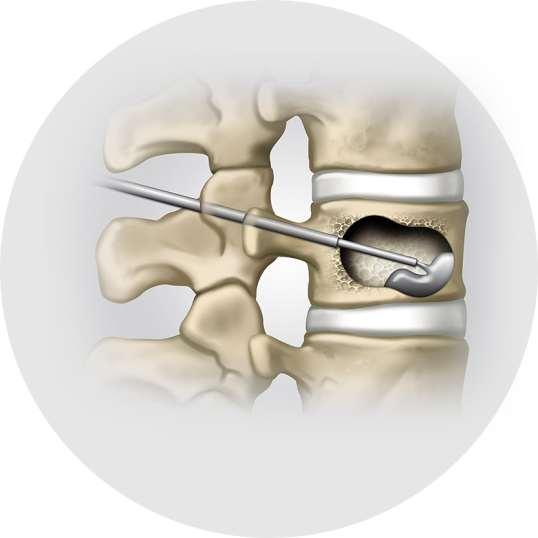
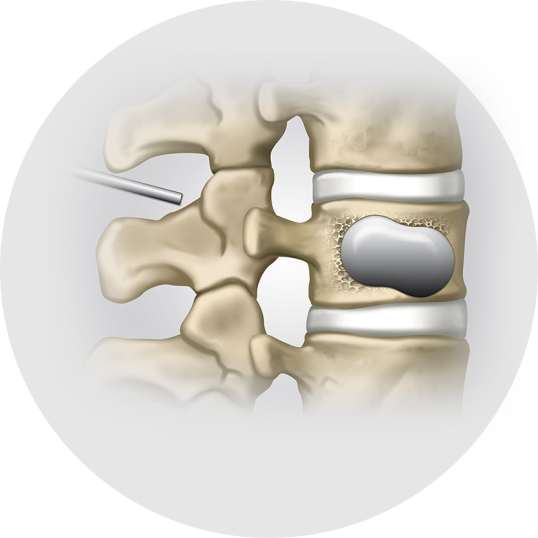
Vertebroplastie
Vertebroplasty is a minimally invasive procedure for treating osteoporotic vertebral fractures. Here bone cement is introduced into the damaged vertebral body through a small access point in the back. This method stabilises the vertebra, relieves pain and improves mobility. Compared with other procedures such as kyphoplasty, however, vertebroplasty allows only limited straightening of the vertebra.
Kyphoplastie
Kyphoplasty is a minimally invasive surgical method for treating osteoporotic vertebral fractures. In contrast to vertebroplasty, with kyphoplasty a balloon catheter is first introduced into the affected vertebra and inflated in order to straighten the vertebral body again. The resulting cavity is then filled with bone cement in order to restore stability and relieve the pain symptoms.
Vertebroplasty and kyphoplasty offer an effective and safe option for treating vertebral fractures, particularly when conservative therapies fail.
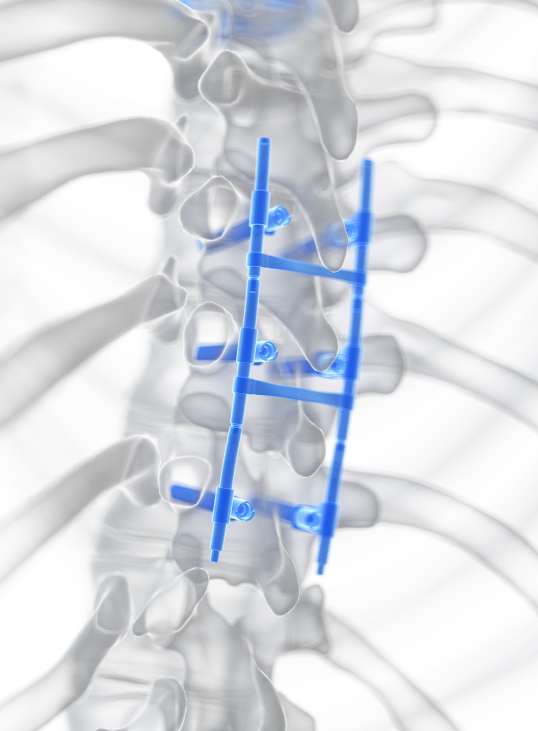
Stabilisation with a titanium cage implant
This method is still relatively new but achieves excellent treatment results. The titanium cage is introduced into the vertebra through a small hole like an expanding plug and straightens it again. It is then likewise stabilised with bone cement. The implant fuses with the bone and provides a stable framework. Stabilisation with bone cement is the method of choice here because the amount of bone available is reduced by the osteoporosis and fixation with screws often does not work sufficiently well.
All the surgical methods described here are gentle for the patient and low in risk. Freedom from pain and normal mobility also often set in within the days following an operation.
At our practice we specialise in osteoporotic vertebral fractures in Düsseldorf. We carry out both conservative treatment and surgery directly on the vertebra.
If you belong to the group of patients with a vertebral fracture or a suspected one, we are the right people to contact. Your wellbeing matters a great deal to us, and we are therefore glad to be available for a competent examination and a personal consultation. Simply arrange an appointment online or call us during our consultation hours directly on the telephone number of the relevant practice. We look forward to seeing you.
Efficient and modern treatment methods for calcific shoulder tendinitis
Frequently Asked Questions: Osteoporotic Vertebral Fractures
What is an osteoporotic fracture?
An osteoporotic fracture is a bone fracture caused by osteoporosis, a condition in which bone density and bone quality are reduced. This leads to increased fragility of the bones.
What should you avoid with a vertebral fracture?
With a vertebral fracture you should avoid heavy physical activity and movements that strain the back. These include lifting heavy objects and jerky movements.
What does an osteoporotic spinal fracture feel like?
An osteoporotic spinal fracture can make itself felt through sudden severe back pain, which often occurs during everyday activities or after minor trauma.
What is the best treatment of osteoporosis with fractures?
The best treatment involves a combination of drug therapy, pain management, physical therapy and measures to strengthen the bones, such as calcium and vitamin D supplements.
What is the life expectancy with osteoporosis?
Life expectancy with osteoporosis can vary and depends on various factors such as general health, the severity of the condition and the occurrence of fractures. Early diagnosis and treatment are important in order to avoid complications.
How long does it take for a vertebral fracture to heal?
The healing time of a vertebral fracture can be several weeks to months, depending on the severity of the fracture and the treatment method.
Which movements should be avoided with a vertebral fracture?
With a vertebral fracture, movements that place heavy strain on the back should be avoided, such as lifting heavy objects, twisting movements and bending forward.
Does health insurance cover treatment for osteoporotic vertebral fractures?
Diagnostics including bone density measurement where indicated, pain management, osteoporosis medication, physiotherapy and any necessary kyphoplasty are covered by statutory health insurance. We clarify the extent with you in Düsseldorf before treatment begins.
Which exercises help after an osteoporotic vertebral fracture?
Straightening back exercises, balance training to prevent falls and light strength training strengthen bone and muscle. Avoid strong forward bending with rotation and heavy lifting. Start only after medical clearance and under guidance.
More treatments for Spine Surgery
Complaints rarely come alone. We also offer these treatments from the same area in Düsseldorf.